
Two tone kitchen cabinets have moved well beyond trend territory. What started as a way to introduce colour without committing to a single bold shade has become one of the most enduring approaches to kitchen design — practical, personal and genuinely versatile across styles from classic shaker to contemporary handleless.
The appeal is straightforward: two colours give you more to work with. A darker lower cabinet grounds the space while a lighter upper keeps it open. A contrasting island introduces colour without touching the main run. A bold accent on a pantry or larder adds character to an otherwise neutral scheme. However you approach it, two tone kitchen design rewards considered choices — and the results, when the combination is right, feel both distinctive and timeless.
In this guide we explore the best two tone kitchen cabinet ideas by look and colour, from Farrow & Ball combinations to natural wood and painted pairings, with real interiors to inspire every style.
A Contrasting Kitchen Island
A contrasting island is the easiest entry point into two tone kitchen design — and one of the most effective. Rather than committing to two colours across the entire run of cabinets, the island takes the accent shade while the perimeter stays neutral. The result is a natural focal point that adds personality without overwhelming the room.

The Farrow & Ball Hague Blue island shown here against Strong White perimeter cabinets is a masterclass in confident restraint. The deep inky blue grounds the space and draws the eye, while the pale perimeter keeps the kitchen feeling open and light. A veined marble worktop bridges the two tones without competing with either — exactly the kind of considered detail that elevates a two tone kitchen from trend to timeless.

For those drawn to warmer, more artisan-inspired schemes, Picture Gallery Red makes an equally bold island choice. Paired here with Light Gray cabinetry and warm wood accents, the result feels earthy and characterful — the kind of kitchen that looks collected rather than designed. Hanging baskets, patterned tiles and brass fittings reinforce the warmth of the palette without tipping into kitsch.
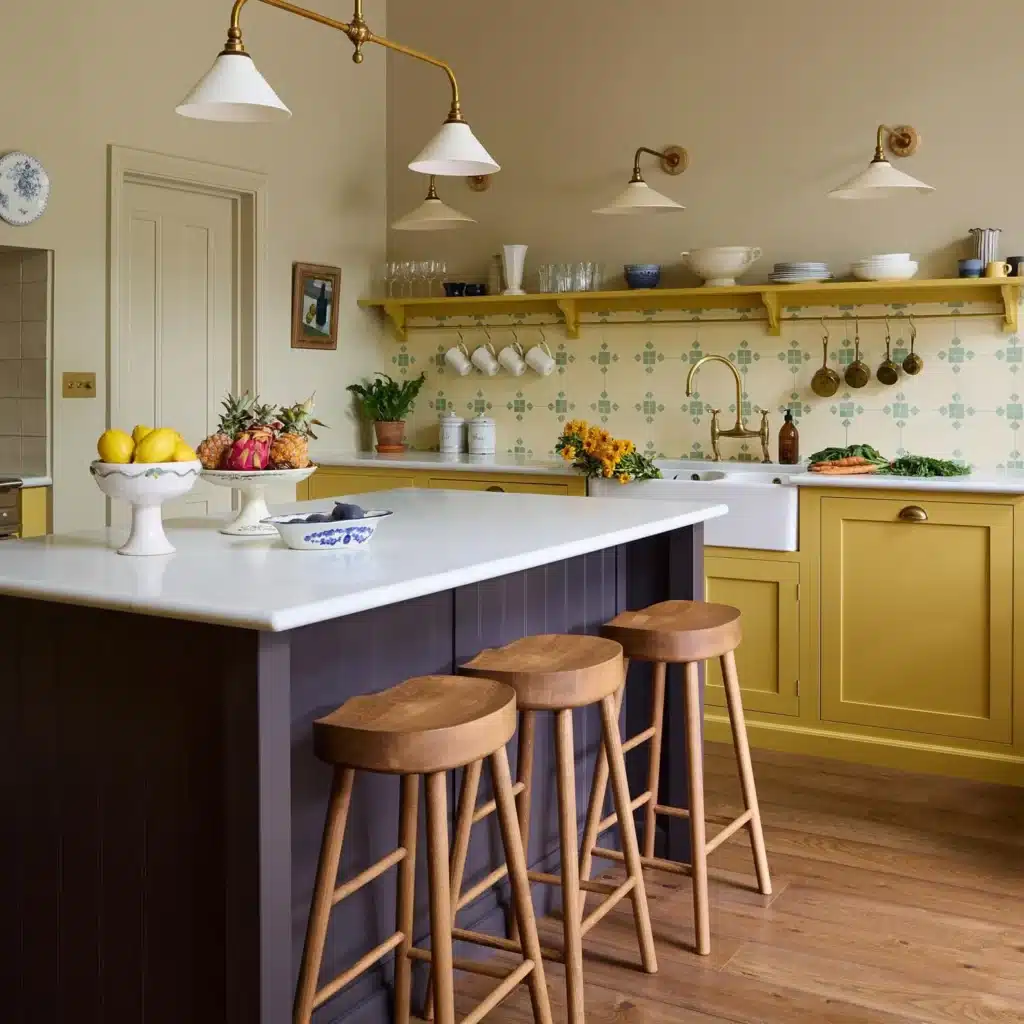
For a warmer, more characterful take on the contrasting island, mustard yellow cabinetry paired with a deep aubergine island has a boldness that feels completely considered. The combination works because both shades share the same earthy richness — neither is trying to dominate the other. Patterned splashback tiles in soft green and cream tie the two tones together, while the Beech Shaker Saddle Stools from ChairSupply bring a natural warmth to the breakfast bar that softens the drama of the palette.
Green and Neutral Two Tone Kitchen Cabinets
Green has become one of the most versatile cabinet colours in contemporary kitchen design, and it works particularly well in two tone schemes because it sits naturally alongside both warm wood tones and cooler neutrals.

This Calke Green kitchen by @claretophaminteriors is a confident example of how to let a single colour carry an entire scheme without overwhelming it. The sage-green cabinetry runs floor to ceiling on the perimeter, while the island — a beautifully curved form in natural oak — provides the second tone entirely through material rather than paint. It’s an approach that feels considered and grown-up: the contrast comes from texture and warmth rather than a second painted colour, which gives the kitchen a cohesion that more contrasting schemes can sometimes lack.

The herringbone oak floor ties everything together, and the white marble worktop keeps the palette from feeling too heavy. For kitchens with good natural light, this kind of green and natural wood pairing is one of the most liveable two tone combinations available — calm enough for everyday life, characterful enough to feel genuinely distinctive. The kitchen breakfast bar configuration also makes the island work harder, turning a functional surface into a casual dining spot that suits the relaxed character of the scheme.
Soft and Pastel Two Tone Kitchen Cabinets
Pastel two tone kitchens have a playful, characterful quality that works especially well in older properties, cottage kitchens and homes with a more eclectic, collected aesthetic. The key is choosing shades that feel chalky and muted rather than bright — it’s the softness of the palette that stops it tipping into something childish.

This kitchen by @oliveandbarr pairs Farrow & Ball’s Breakfast Room Green on the lower cabinets with Setting Plaster walls — a combination that feels both unexpected and completely natural. The green brings a gentle botanical quality to the lower half of the kitchen while the dusty pink of the walls adds warmth and a sense of lived-in character above. Brass cup handles and a traditional range cooker reinforce the heritage feel, while open shelving piled with ceramics and cookware gives the space an authentically personal quality that styled kitchens rarely achieve.
This is a two tone approach that works particularly well when you’re not starting from scratch — the Setting Plaster wall colour does much of the heavy lifting, meaning the green cabinetry doesn’t need a contrasting upper cabinet to complete the scheme. For anyone nervous about committing to two painted cabinet colours, using a strong wall colour as the second tone is a smart and lower-risk route into the look.

Neutral Two Tone Kitchen Cabinets with Natural Wood
For those who want the layered interest of a two tone kitchen without committing to colour, neutral and natural wood pairings offer the most versatile and enduring approach. The contrast comes from tone and texture rather than opposing shades — and the result tends to feel quietly sophisticated rather than trend-led.

The Slipper Satin and Pointing kitchen by @roseywoodinteriors demonstrates this beautifully. Both shades sit within the same warm neutral family, but the shift between them — painted perimeter cabinets in the cooler Pointing against a natural oak island in Slipper Satin tones — creates a layered depth that a single-colour kitchen simply can’t achieve. Antique brass hardware, aged mirror splashback and stone flooring reinforce the warmth of the palette, while the overall effect feels refined and considered without being overly formal.

For a more contemporary take, the French Gray and Wimborne White kitchen by @advanessafaivre shows how a cooler neutral palette can work just as effectively. The sage-toned French Gray cabinetry sits against Wimborne White walls and architectural arches, with a natural oak island providing warmth at the centre of the space. The result feels distinctly European in character — calm, considered and beautifully proportioned.
Natural wood islands are one of the most reliable ways to introduce a second tone into a neutral kitchen without the commitment of a second paint colour. Whether the cabinetry is warm or cool in tone, oak, walnut or reeded wood panelling will almost always provide the right counterpoint.
Dark and Light Two Tone Kitchen Cabinets
The dark and light principle works just as well in traditional kitchens as it does in contemporary ones. This soft blue island against dark navy cabinetry and pantry shows how tone-on-tone two colour combinations can feel refined rather than stark — the shift between the two blues is subtle enough to read as considered rather than contrasting.
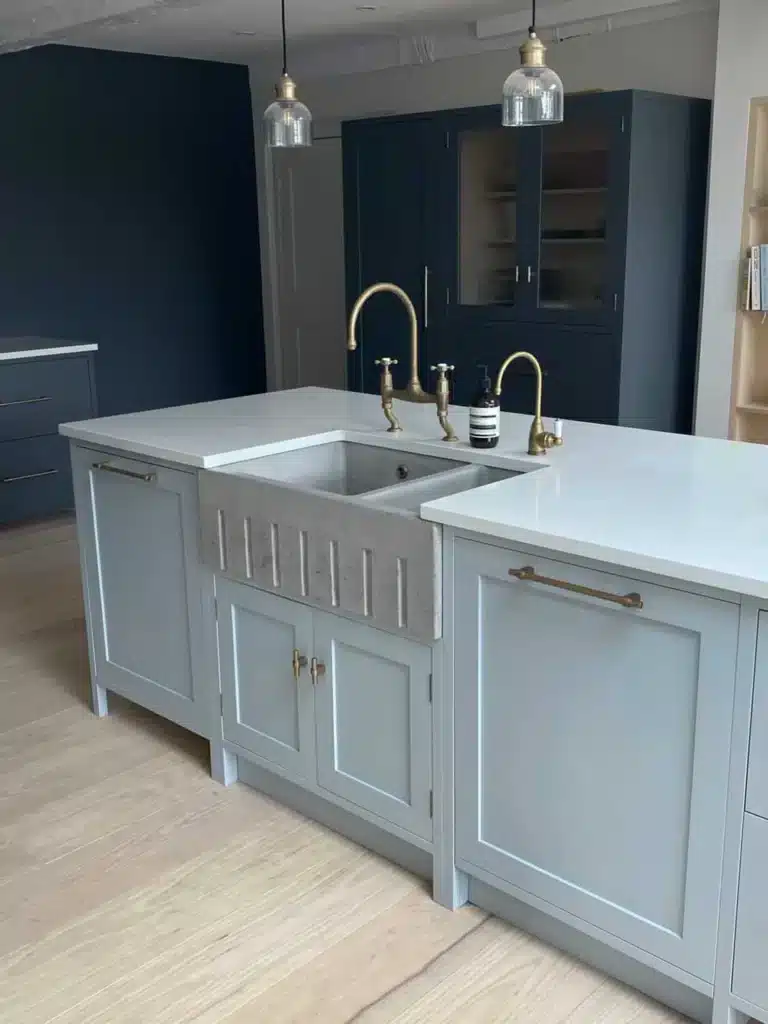
The standout feature here is the concrete Belfast sink by MorrisConcreteDesign — a naturally poured double sink that brings genuine craft and industrial texture to a kitchen that could easily have played it safe. Paired with a brass bridge tap and white marble worktop, it sits at the intersection of traditional and contemporary in a way that feels completely uncontrived. The brass hardware throughout reinforces the warmth and stops the navy from reading as cold or corporate.
It’s a combination that suits period properties particularly well. Older homes with high ceilings and good natural light can carry deeper tones on the upper cabinetry in a way that more modern spaces often can’t — and when the two blues are as carefully chosen as these, the result feels like a kitchen that has always been there.
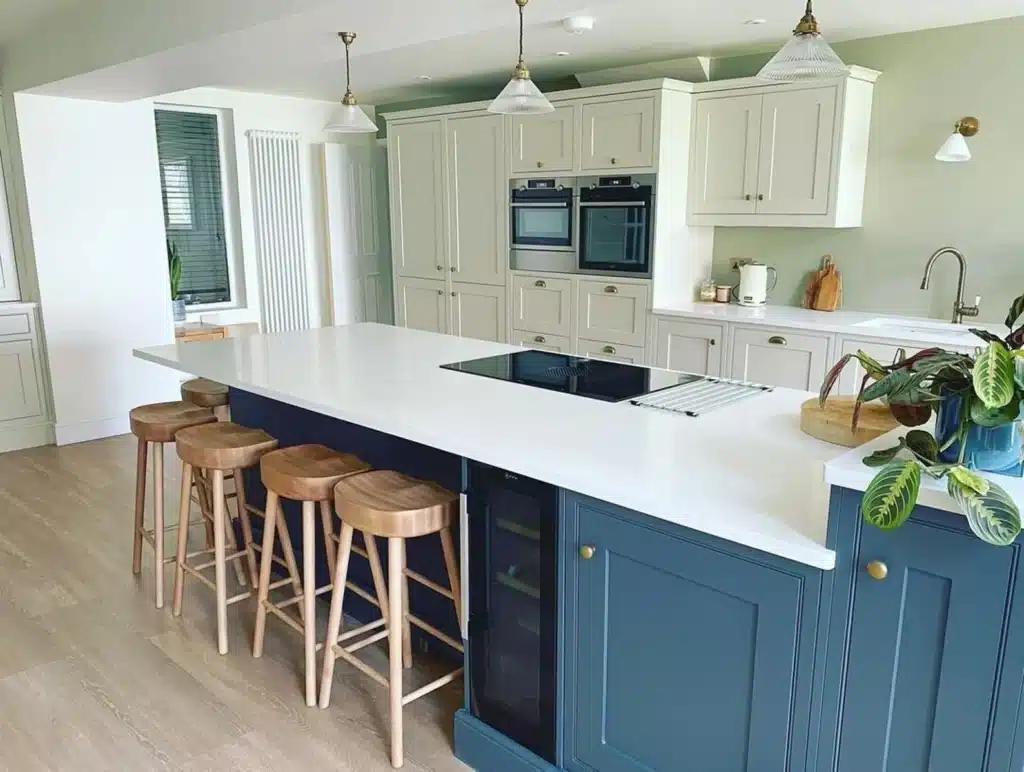
A cream perimeter kitchen with a deep navy island is one of the most classic dark and light two tone combinations — and this example shows why it endures. The pale grey-green walls, sitting in the same family as Farrow & Ball’s Blanc de Chine, soften what could otherwise feel like a stark contrast, giving the scheme a cohesion that feels considered rather than formulaic. The Beech Shaker Saddle Stools from ChairSupply at the island add a natural warmth that stops the navy from reading as cold or corporate.
The dark and light approach also works well beyond the classic navy and white. Charcoal and cream, forest green and off-white, deep teal and warm stone — any combination that places a rich, saturated shade at the base with a softer neutral above will follow the same principle and deliver the same sense of balance.

Modern Two Tone Kitchen Cabinets

Not all two tone kitchens lean traditional. This handleless mustard yellow kitchen by @suryanambelas takes a more graphic, continental approach — flat-front cabinetry in a warm ochre yellow paired with a slate blue worktop and deep terracotta walls. The combination feels bold without being loud, the three earthy tones sharing enough warmth to hold together as a cohesive palette.
This is two tone kitchen design at its most architectural. There are no handles, no cornicing, no decorative details to soften the lines — just flat planes of colour working against each other with quiet confidence. The terracotta floor tiles and cast iron radiator add texture and age, stopping the scheme from feeling clinical despite its minimalism.
For kitchens with clean lines and modern joinery, this kind of colour-forward approach can be more effective than any amount of hardware or detailing. The colour does all the work.
Frequently Asked Questions
Are two tone kitchen cabinets a good idea?
Yes — when the combination is well considered, two tone kitchen cabinets add depth, character and visual interest that a single colour scheme can’t achieve. The key is choosing colours that share a common undertone or material reference, so the contrast feels intentional rather than accidental.
Are two tone kitchens still in style in 2026?
Absolutely. Two tone kitchens have moved beyond trend into a lasting design approach. The focus has shifted away from high-contrast novelty combinations toward more considered pairings — neutral and wood, dark and light, tone-on-tone — that feel both current and enduring.
What colours work best for two tone kitchens?
The most successful combinations tend to be Hague Blue and Strong White, Calke Green and natural oak, Picture Gallery Red and Light Gray, and Pointing with natural wood. As a general rule, earthy and heritage-inspired shades work better than bright primaries, and pairing a warm tone with a cool one creates the most satisfying contrast.
What is the rule for two tone kitchen cabinets?
The most reliable rule is darker below, lighter above — it grounds the space and keeps it feeling open. However this can be reversed for a more dramatic effect. The second rule is to limit the scheme to two tones; introducing a third painted colour usually makes the kitchen feel busy rather than considered.
What is the 3 kitchen rule?
The 3 kitchen rule refers to limiting a kitchen to three key materials or finishes — typically a cabinet colour, a worktop material and a flooring or wall treatment. In a two tone kitchen, this means the two cabinet colours count as one element, with worktop and flooring as the other two.
What popular kitchen trend is dying out?
High-gloss, handle-free white kitchens and very stark grey schemes are fading. The move is firmly toward warmer tones, natural materials and more personal, characterful colour choices — which is exactly why two tone kitchens with heritage paint colours are having such a strong moment.
More kitchen inspiration

Yellow Kitchen Ideas
From butter yellow to rich mustard — warm, heritage-inspired shades for every kitchen style.
Read the article
Blue Kitchen Ideas
Navy, duck egg and inky blue — how to use blue cabinetry with confidence in any kitchen scheme.
Read the article
Browse All Kitchen Ideas
Colours, layouts, materials and styling — all our kitchen content in one place.
Explore the kitchen edit