
Afternoon tea ideas at home come down to three things: good tea, a tiered stand of small bites, and a table that invites guests to linger. This guide covers the timing, the menu, the table setting and the tea itself, and explains how afternoon tea differs from high tea, so a gathering for four or a celebration for twelve runs smoothly.

Shop the look
Classic Old Country Roses afternoon tea
The rose-patterned china pictured at the top of this guide, from Royal Albert. Gold-edged, softly floral and made for a white cloth and fresh flowers.


Affiliate note: Some links may be affiliate links, meaning Artisan Haus may earn a small commission at no extra cost to you.
High Tea vs Afternoon Tea: What Is the Difference?
The two are often confused, and the names are usually swapped in party invitations. Afternoon tea is the lighter, dainty meal served around three or four in the afternoon: finger sandwiches, scones with jam and cream, and cakes. High tea began as a hearty early evening meal, taken at a high dining table, with dishes such as pies, cheese, bread and cold meats alongside a strong brew. Today, many people say “high tea party” when they mean afternoon tea, and the menu below follows the afternoon tea tradition.
How Much Food per Guest
As a rule of thumb, allow about four finger sandwiches, one or two scones and three or four sweet bites per person. Allow one pot of tea for every three or four guests, with a second pot of hot water on hand.
A Simple Timeline
Two days before, buy the tea, cream, jam and fresh ingredients. The day before, bake the sponge and other cakes, make any set desserts, and lay the table. On the morning, make the sandwiches and whip the cream. Half an hour before guests arrive, warm the scones and warm the teapots.
What to Serve: The Afternoon Tea Menu
Scones

Serve plain and fruit scones warm, with clotted cream and strawberry jam. The jam-or-cream-first question has been argued for generations: Cornwall puts the jam on first, Devon starts with the cream. Offering both jam and cream in small bowls lets guests settle the debate themselves. Scones are best eaten the day they are baked.
Cakes and Sweet Bites
A tiered stand looks best with variety in size and colour. A layered vanilla sponge is the anchor, and it is easy to slice into small portions. Around it, add a French lemon tart, mini pavlovas with fresh fruit, pink macarons, Japanese cheesecake, decorated chocolate brownies and cake pops. A carrot cake traybake cuts into neat squares, and warm cinnamon rolls give a modern twist for cooler afternoons. For guests who avoid dairy or eggs, a lemon posset made with silken tofu and a vegan fruit loaf keep everyone included.
How to Load a Tiered Stand

On a three tier stand, the finger sandwiches go on the bottom tier, where the largest plate can take the most weight. Layered cakes sit in the middle, and the top tier is kept for the smallest, most delicate pieces, such as fruit tartlets and macarons. Guests work upward from savoury to sweet. Scones are best served warm on a separate plate or in a covered basket, with the jam and cream alongside, so they do not need to fit on the stand at all. If a three tier stand is not available, use three matching plates on the table, or one long board for each course, and keep the heaviest items at the bottom so everything stays steady.

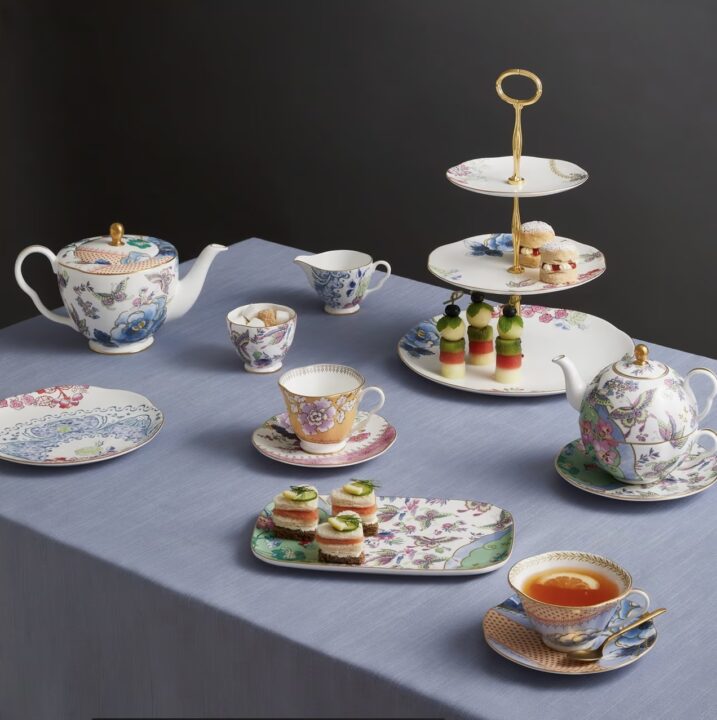
A tiered stand does much of the styling on its own. Wedgwood’s Fortune 3 Tier Cake Stand has three scalloped plates decorated with floral and bird motifs and a navy patterned rim, joined by a gold-coloured stem with a ring handle. It comes in under £200, shows off sandwiches, mini cheesecakes and small savouries well, and sits happily beside a teapot, cups and jug from the same collection.
Choosing the Tea
Offer a small range so guests can choose. A classic Earl Grey, a bright Darjeeling and a robust English breakfast cover most tastes, and a Ceylon blend labelled for afternoon drinking suits the occasion well. Wedgwood sells all four in pale blue caddies with a fine toile-style print, which look as good on the tea tray as they do in the cupboard, with prices from under £15. Warm the pot first, then brew black teas with water just off the boil for three to five minutes. Green tea prefers cooler water, around 80°C, for two to three minutes. Serve milk and sliced lemon separately, since lemon suits lighter teas and does not go with milk.
For guests avoiding caffeine, a fruit or herbal blend adds colour to the tea tray. Annie’s Herb Kitchen, a small producer based in rural Argyllshire on Scotland’s west coast, began in 2020 with seasoning salts made from locally sourced herbs and has since expanded into loose fruit and herbal teas. Its Wild Berries blend combines forest fruits, hibiscus and rose hips, with aromas of blueberry, strawberry and raspberry. A tin makes around 20 cups and works hot or iced, so it suits both a teapot on the table and a jug of iced tea in warmer weather. Fruit Cuddle is the second caffeine free option, with tins for under £10.
Setting the Table

A striped linen cloth sets the tone before a single plate is down. PoppyandHonesty, a small Etsy seller based in Falmouth, makes a Seaside Stripe linen tablecloth in soft peach, yellow and grey-blue, with matching napkins sold in sets of two. The tablecloth is under £150 and the napkins are under £10 before postage. Against the stripes, plain white or scalloped plates and a woven placemat keep things calm, and flowers in one of the stripe colours, such as peach ranunculus, tie the table together.
A white or pale cloth lets the china and the food stand out. Set out a cup and saucer, a side plate, a napkin, a teaspoon and a small knife at each place, with a cake fork for the sweet course. Keep centrepieces low so guests can see across the table.
Mixing and matching is part of the fun. Pair one patterned teapot with plain white or pastel pink cups and saucers, or alternate the two so no two guests have the same cup. Keeping one colour running through the table, such as soft pink, ties it together.
Tea Sets We Love

Elevate your high tea with this exquisite Wedgwood tea set. It includes a teapot adorned with blue and pink florals and a modern checkered base, a sugar bowl featuring a pink lattice pattern with a golden lid, and a cream jug that complements the set with similar floral elegance. Each piece is accented with gold trim, blending classic grace with a contemporary palette, perfect for a sophisticated tea experience.

For a contemporary table, Tom Dixon’s Bump range is a bold contrast to floral china. The glass teapot in green, with a black lid, lets guests see the colour of the brew, and it pairs with a set of two black glass tea cups for a graphic, sculptural look. The teapot comes in under £150 and the cups under £70. Set them against white plates and a plain white stand so the colour stays the focus, and use them for green tea or a hot matcha.
Invitations, Dress Code and Favours
Digital invitations are quick and easy to personalise, while a printed card suits a special occasion. For a dress code, “smart casual” works well: tea dresses, tailored trousers, a blazer or a pretty blouse. If guests ask what to wear to an afternoon tea, the answer is usually a step up from everyday, without needing anything formal. Small favours finish the occasion nicely: a mini jar of honey, a custom-blended tea sachet or a wrapped shortbread biscuit.
Afternoon Tea Etiquette in Brief
Modern afternoon tea is relaxed, but a few habits are worth knowing. Break scones open by hand rather than cutting them, stir tea back and forth rather than in circles, and keep the napkin on the lap. The old etiquette guides go much further than this, covering everything from how to hold a cup to the order guests should be served in, but few hosts follow all of it today. The real rule of afternoon tea is knowing the traditions well enough that breaking them looks like ease rather than a mistake. Once the basics are second nature, the occasion becomes about good company rather than getting it right.
FAQs
What is the difference between high tea and afternoon tea?
Afternoon tea is a light meal served in the mid-afternoon with sandwiches, scones and cakes. High tea is a heartier early evening meal. In everyday use, “high tea” is often used for what is technically afternoon tea.
Which is fancier, high tea or afternoon tea?
Traditionally, afternoon tea. It began as a light, refined meal for the upper classes, while high tea was a hearty early evening supper. Today, though, many hotels and hosts use “high tea” for the elegant tiered-stand version, so the two names are often used interchangeably. If an invitation says high tea, expect sandwiches, scones and cakes rather than a cooked meal.
Is high tea a British thing?
Yes. Both afternoon tea and high tea developed in Britain in the nineteenth century, and both remain part of British food culture today.
What are the three main foods served at an afternoon tea?
Sandwiches, scones and cakes. Sandwiches are small, crustless and usually filled with cucumber, smoked salmon, egg or ham. Scones come with clotted cream and jam. Cakes and pastries range from a Victoria-style sponge to lemon tart and shortbread.
What do I need to host an afternoon tea at home?
Tea in a few varieties, milk, lemon and sugar, a tablecloth and napkins, cups and saucers, side plates, cutlery, a teapot, a milk jug, a sugar bowl, a hot water pot, a tiered stand and fresh flowers for the table.
How long does afternoon tea last?
About two hours. A three o’clock start finishes around five, which leaves the evening free.
Should you add milk before or after the tea?
Traditionally, milk went in first to protect delicate china from the heat, and some still prefer it that way. Modern etiquette favours pouring the tea first, so the host can judge its strength before adding milk. Either is acceptable today, and it’s another one of those small debates that afternoon tea guests enjoy having.