
Rustic fencing ideas are having a moment — and not for the first time. From the woven willow hurdles of cottage borders to chunky post and rail across country estates, rustic fencing has been defining the character of British gardens for centuries. What sets it apart from the standard close-board panel is its connection to natural materials, traditional craft, and the kind of imperfect beauty that only improves with age.
Whether the garden is a sprawling Hampshire plot or a compact courtyard, there is a style of rustic garden fencing to suit. This guide covers the main types of rustic fencing available in the UK, how each one works in different garden settings, and what to consider when choosing.

Types of rustic fencing
Rustic fencing covers a wide range of styles and materials, from ancient craft traditions to contemporary interpretations of natural materials. The main types available in the UK are:
Chestnut paling fencing — individual stakes of split sweet chestnut connected by galvanised wire. Traditionally used on farms and estates, it works beautifully as a boundary or edging in naturalistic gardens. Naturally rot-resistant with a lifespan of 15–20 years untreated.
Woven willow hurdles — panels of interwoven willow rods, one of the oldest forms of fencing in Britain. Lightweight, wind-permeable and deeply characterful. Available as ready-made panels or made to measure from specialist makers.
Hazel hurdles — similar to willow but woven from thicker hazel branches, giving a sturdier, more textured finish. A classic of the country garden and cottage border.
Post and rail fencing — horizontal rails fixed to round or half-round rustic timber posts. Simple, open and suited to paddock boundaries, country garden perimeters and sloping ground.
Split rail fencing — a more rustic, informal variation of post and rail, using rough split timber. Common in American and ranch-style gardens but increasingly seen in UK rural and farmhouse settings.
Rustic picket fencing — traditional pointed-top timber pickets in a rougher, unplaned finish. More informal than painted Victorian picket and works well with wildflower planting.
Rustic metal fencing — wrought iron or Corten steel in organic, hand-forged forms. Plant supports, parterre edging and border dividers fall into this category. Ages to a warm rust patina.
Pole fencing — whole or half-round timber poles in a simple horizontal or vertical arrangement. Particularly well suited to woodland garden edges and native planting schemes.
Chestnut fencing

Sweet chestnut is one of the most traditional fencing materials in the British landscape, and for good reason. It is naturally high in tannins, which makes it resistant to rot and decay without any chemical treatment. Left unfinished, chestnut weathers to a silvery grey that sits beautifully in a naturalistic planting scheme.
Chestnut paling — individual split stakes wired together in a continuous run — is the classic form. It works as a boundary fence, a temporary barrier around new planting, or as edging for a kitchen garden or allotment plot. Chestnut post and rail is the heavier, more permanent version, suited to longer boundaries and country garden perimeters.
What to know when buying chestnut fencing:
•   Look for coppiced sweet chestnut from UK woodland — locally sourced is lower carbon and often higher quality
•   Stakes should be cleanly split, not sawn, for maximum durability
•   No treatment is needed, though linseed oil can be applied if a richer tone is preferred
•   Expect a lifespan of 15–20 years for quality chestnut paling; post and rail can last considerably longer
Willow and woven hurdle fencing
Woven willow and hazel hurdles represent some of the oldest craft traditions in British garden-making. Neolithic in origin, the hurdle panel is still made by hand today using techniques passed down through generations of woodland workers.
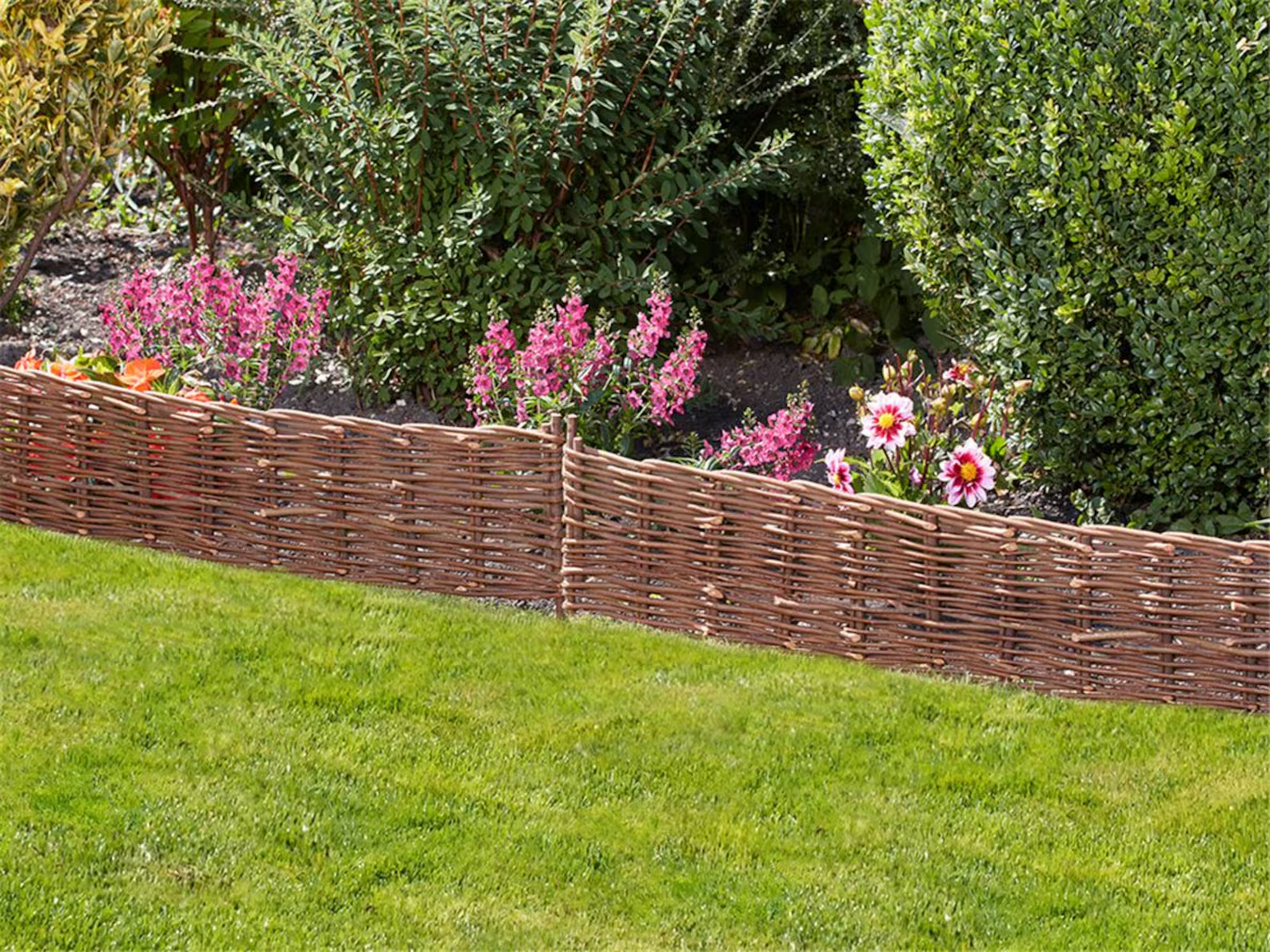
Willow hurdles are woven from flexible willow rods around upright stakes, creating a panel that is simultaneously rustic and refined. The weave allows air to pass through, which actually makes willow fencing more resilient in exposed positions than solid panel fencing — wind diffuses rather than pushes. Hazel hurdles use thicker, less flexible branches and have a correspondingly more rugged texture.
Both work best in cottage gardens, country borders and naturalistic spaces where the aim is an informal, handcrafted feel. Willow hurdles also make excellent temporary screens — useful for sheltering newly planted hedging or creating a seasonal boundary while a more permanent solution establishes.
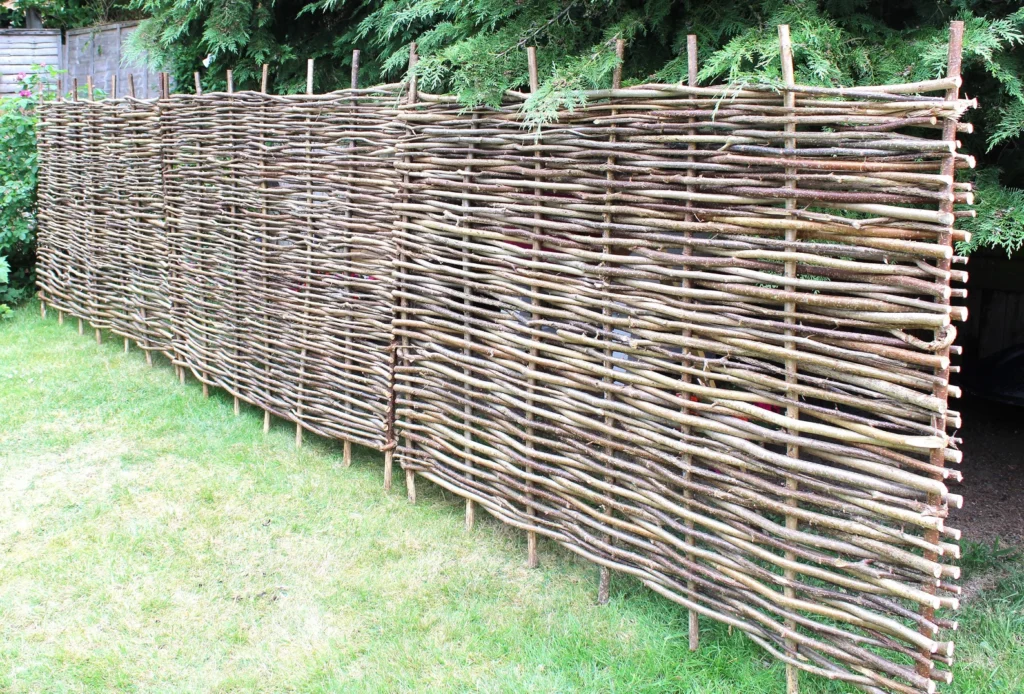
Rustic fencing ideas using willow hurdles:
•   Line the back of a deep flower border to add height and structure behind perennial planting
•   Use low hurdles (60–90cm) as edging around a vegetable or cutting garden
•   Create a seating enclosure or sheltered corner in a larger garden
•   Screen a compost area or utility space without the heaviness of solid fencing
Post and rail fencing
Rustic post and rail fencing is one of the most versatile options for larger gardens and country plots. It uses upright posts — typically round or half-round timber — with two or three horizontal rails slotted or nailed between them. The result is open, structural and completely at home in a rural setting.
Where a solid panel fence would feel imposing at the edge of a large garden, post and rail keeps the boundary visible without blocking light or views. It works well alongside a mixed native hedge, encouraging the planting to become the primary boundary over time while the fence provides structure in the early years.
Post and rail fencing suits sloping ground particularly well because each panel can be adjusted independently. It is also the most straightforward rustic fence type for a confident DIY installation, as no specialist skills are required.
Best uses for rustic post and rail:
•   Perimeter boundary on larger or rural plots
•   Edging along a driveway or approach
•   Dividing a lawn from a wildflower meadow or orchard
•   Alongside a maturing native hedge
Rustic metal fencing
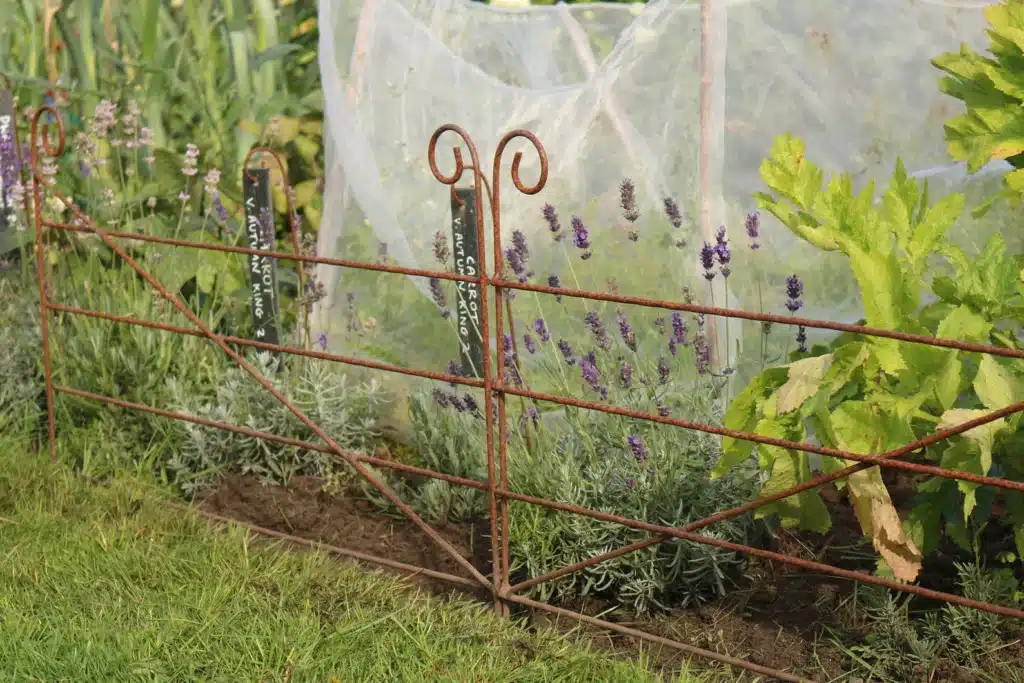
Not all rustic fencing is wooden. Rustic metal fencing — typically wrought iron, hand-forged steel or Corten weathering steel — brings an entirely different kind of character to the garden. Where timber fencing ages through weathering and grain, metal fencing develops a warm rust patina that deepens over time and anchors beautifully in a planting scheme.
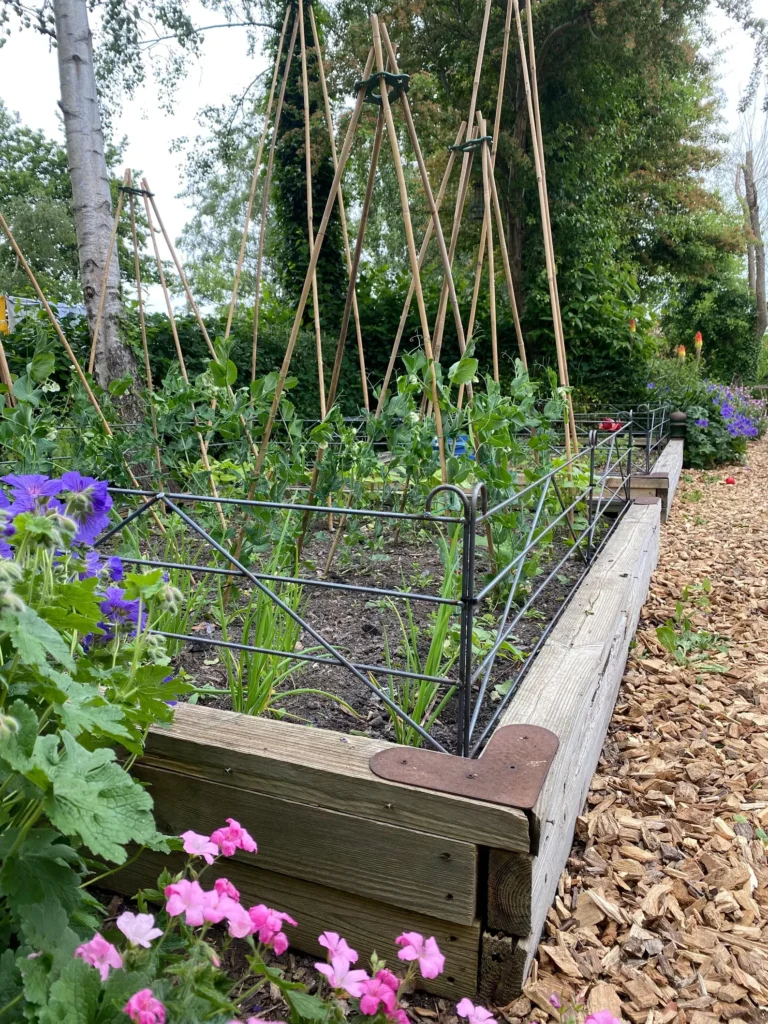
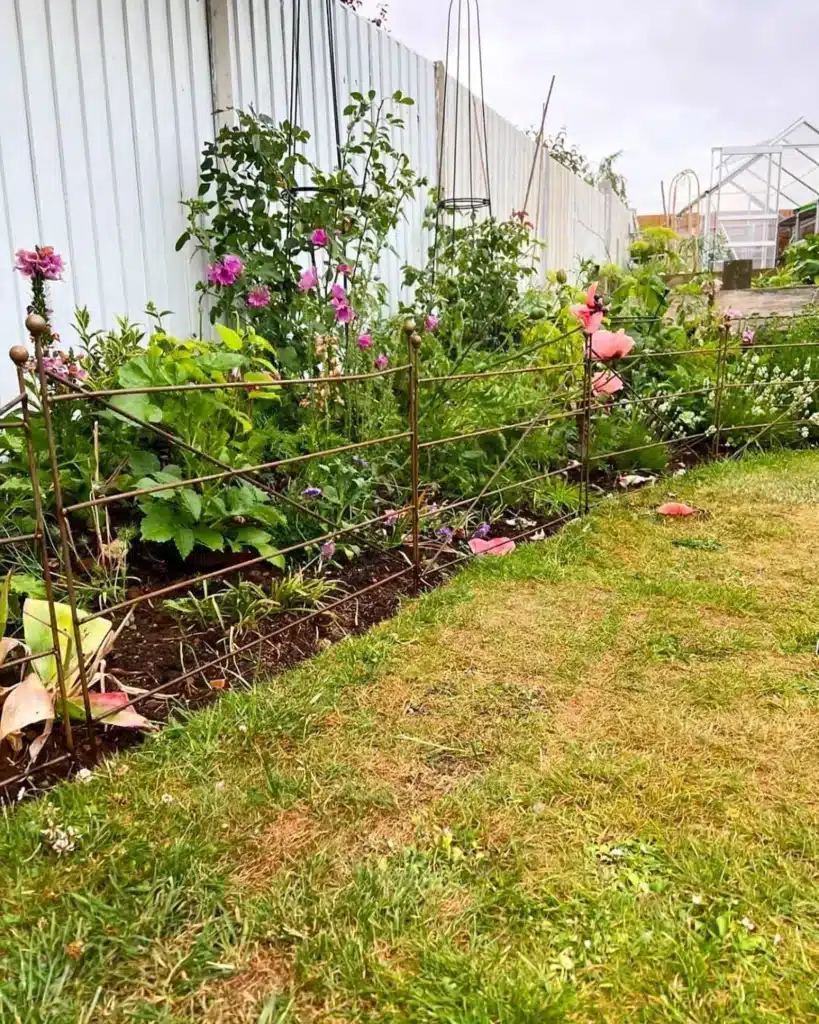
Low rustic metal edging is particularly useful in the kitchen or cutting garden, where simple metal hoops or bar frames delineate beds without competing with the planting. Taller rustic metal panels or plant support structures work in cottage and artisan garden settings, adding sculptural interest alongside climbing roses, salvias and other perennials.
Corten steel, which is designed to develop a stable rust layer rather than corrode, has become an increasingly popular material for contemporary gardens with a rustic edge — clean in form but deeply organic in finish.
Rustic fencing ideas for cottage gardens
The cottage garden is the natural home of rustic fencing. Its informality, its dependence on layered planting and its connection to traditional materials make it the ideal setting for woven willow, split chestnut, rustic picket and low metal edging alike.

In a cottage garden, the fence rarely stands alone. It becomes a support for climbing roses, clematis and sweet peas; a backdrop for tall foxgloves and delphiniums; a frame for a gate hung with honeysuckle. The most successful rustic cottage garden fencing choices are those that recede — that feel like a natural extension of the planting rather than a boundary imposed upon it.
Rustic cottage garden fencing ideas:
•   Use low woven hurdles to edge the front of a deep mixed border, keeping the planting contained without interrupting the view
•   Train a rambling rose along a chestnut post and rail fence for a classic country effect
•   Plant a low rustic picket fence with cottage garden staples — catmint, hardy geraniums, lady’s mantle — to soften the base
•   Combine woven willow panels with a clipped hornbeam or beech hedge for a layered backdrop to a seating area
DIY rustic fence ideas
Several types of rustic fencing are well within the reach of a confident DIY gardener, and the results are often more characterful than anything bought off a shelf.
Branch and pole fencing is one of the most accessible options. Uprights of hazel, sweet chestnut or any sturdy coppiced timber are driven into the ground, with horizontal rails lashed or wired between them. The results are intentionally rough and are well suited to woodland garden edges, natural play areas and wildlife garden boundaries.
Woven stick edging works on a smaller scale — flexible stems of willow, hazel or dogwood are woven between short stakes to create low border edging that takes an afternoon to install and costs very little. It roots into the ground and can be extended or reshaped year to year.
Reclaimed wood fence panels — using old scaffold boards, timber offcuts or reclaimed railway sleepers — can create a highly individual rustic boundary. The key is consistency of height and spacing, which keeps the result looking considered rather than cobbled together.
For any DIY rustic post installation, the standard rule applies: one third of the post length below ground. Use a post rammer rather than a mallet for clean, stable installation, and check that posts are level before fixing rails.
Rustic fence paint and care
Most truly rustic fencing materials — chestnut, willow, hazel — require no treatment and are better left without. Chemical treatments can actually reduce the lifespan of naturally rot-resistant timbers by introducing moisture pathways.
Where treatment is appropriate — on softwood post and rail, rustic picket panels or reclaimed timber — a rustic brown fence paint gives a warm, earthy finish that reads as natural in a garden setting. Cuprinol’s rustic brown range is one of the most widely searched options in this category and is widely available from garden retailers.
For willow hurdles, an annual treatment with a 50:50 mixture of boiled linseed oil and turpentine helps preserve the material and extend the life of the panel. Apply in early spring before the growing season begins.
FAQs
What is rustic fencing?
Rustic fencing refers to fencing made from natural, minimally processed materials — including woven willow and hazel, split chestnut paling, rough-sawn timber post and rail, and hand-forged metal. It is defined by its organic texture, natural colour and handcrafted character, as distinct from the smooth, uniform finish of standard fence panels.
What are the main types of rustic fencing in the UK?
The most common types are chestnut paling, woven willow hurdles, hazel hurdles, post and rail, split rail, rustic picket and rustic metal edging. Each suits different garden styles and scales.
How long does rustic fencing last?
Lifespan varies by material. Sweet chestnut paling lasts 15–20 years untreated. Willow and hazel hurdles typically last 8–12 years with basic care. Rustic post and rail in treated softwood can last 15–25 years depending on the timber and ground conditions. Corten steel and wrought iron are effectively permanent.
Does rustic fencing need treating?
Chestnut, willow and hazel do not need chemical treatment — their natural tannin content provides rot resistance. Willow hurdles benefit from an annual application of linseed oil and turpentine. Softwood rustic fencing (post and rail, picket) should be treated with a quality fence paint or preservative on installation and every two to three years thereafter.
What is the cheapest type of rustic fencing?
Chestnut paling rolls are among the most cost-effective rustic fencing options, particularly for longer runs. Woven stick edging made from garden prunings costs almost nothing if the materials are available. Ready-made willow or hazel hurdle panels represent better value than made-to-measure equivalents.
When is the best time to install rustic fencing?
Post and rail and panel fencing can be installed year-round, though dry conditions make ground work easier. Woven willow fencing installed in situ — continuous weave style — is typically done between November and July, when the willow is freshest. Avoid installing panel fencing in very wet or frozen ground.