
There is something quietly irresistible about a Japandi bathroom. Rooted in the meeting of two design philosophies — the warm, functional minimalism of Scandinavia and the refined, nature-led simplicity of Japan — it creates a bathroom that feels less like a utilitarian space and more like a private retreat.

Where other interior styles demand statement pieces and bold gestures, Japandi asks for restraint. A smooth stone basin. A solid wood vanity with open shelving. Walls in chalky, muted tones. The result is a space that is simultaneously calm and considered, beautiful because of what has been left out as much as what has been included.
In this guide, we explore Japandi bathroom ideas across every element of the room — from tiles and paint colours to vanity units, lighting, mirrors and accessories — with products chosen for their quality, craftsmanship and alignment with the Japandi ethos.

What is Japandi Bathroom Design?
Japandi is a design fusion that takes the hygge warmth of Scandinavian interiors and blends it with the wabi-sabi philosophy of Japanese aesthetics — the art of finding beauty in imperfection and impermanence. In a bathroom context, this translates to a space that prioritises natural materials, a neutral colour palette, clean lines and purposeful simplicity.
Unlike stark minimalism, Japandi bathrooms feel lived-in and warm. Textures matter: raw linen towels, smooth ceramic vessels, aged brass taps, unpolished stone. Every object earns its place. Clutter is absent not because it has been hidden, but because it was never invited in.

The Japanese bathroom tradition adds another layer — a deep respect for the bathing ritual itself. The ofuro, or deep soaking tub, is central to Japanese bathroom culture, treating the bath not as a quick necessity but as a meditative practice. Japandi design honours this by creating spaces that invite you to slow down.
Japandi Bathroom Colour Palette
The Japandi colour palette is built on restraint. Soft whites, warm creams, chalky greys and earthy taupes form the foundation, with natural wood tones providing warmth and occasional deeper accents — dark charcoal, aged bronze, or muted forest green — adding depth without disrupting the calm.
Farrow & Ball offer some of the finest paint colours for a Japandi bathroom scheme. Their soft neutral range sits perfectly within the aesthetic, with colours that shift beautifully in natural and artificial light.
Japandi Bathroom Tiles
Tiles are one of the defining decisions in any Japandi bathroom design. The right tile should feel organic rather than manufactured — matte rather than glossy, textural rather than flat, natural in tone rather than clinical. Large format tiles in stone-look finishes work particularly well, creating a sense of calm continuity across walls and floors.
Porcelanosa offer some of the best Japandi bathroom tiles available in the UK, combining high-quality materials with the understated, architectural aesthetic that Japandi demands.
Japandi Bathroom Tiles
Porcelanosa — Stone-Look Floor & Wall Tiles

Glem White Nature
Large format pure white stone tile, 120×120cm. Seamless and serene for walls and floors.
View Tile

Urban Caliza Nature
Warm sand and taupe stone tile, 59.6×59.6cm. Perfect for a grounded, earthy scheme.
View Tile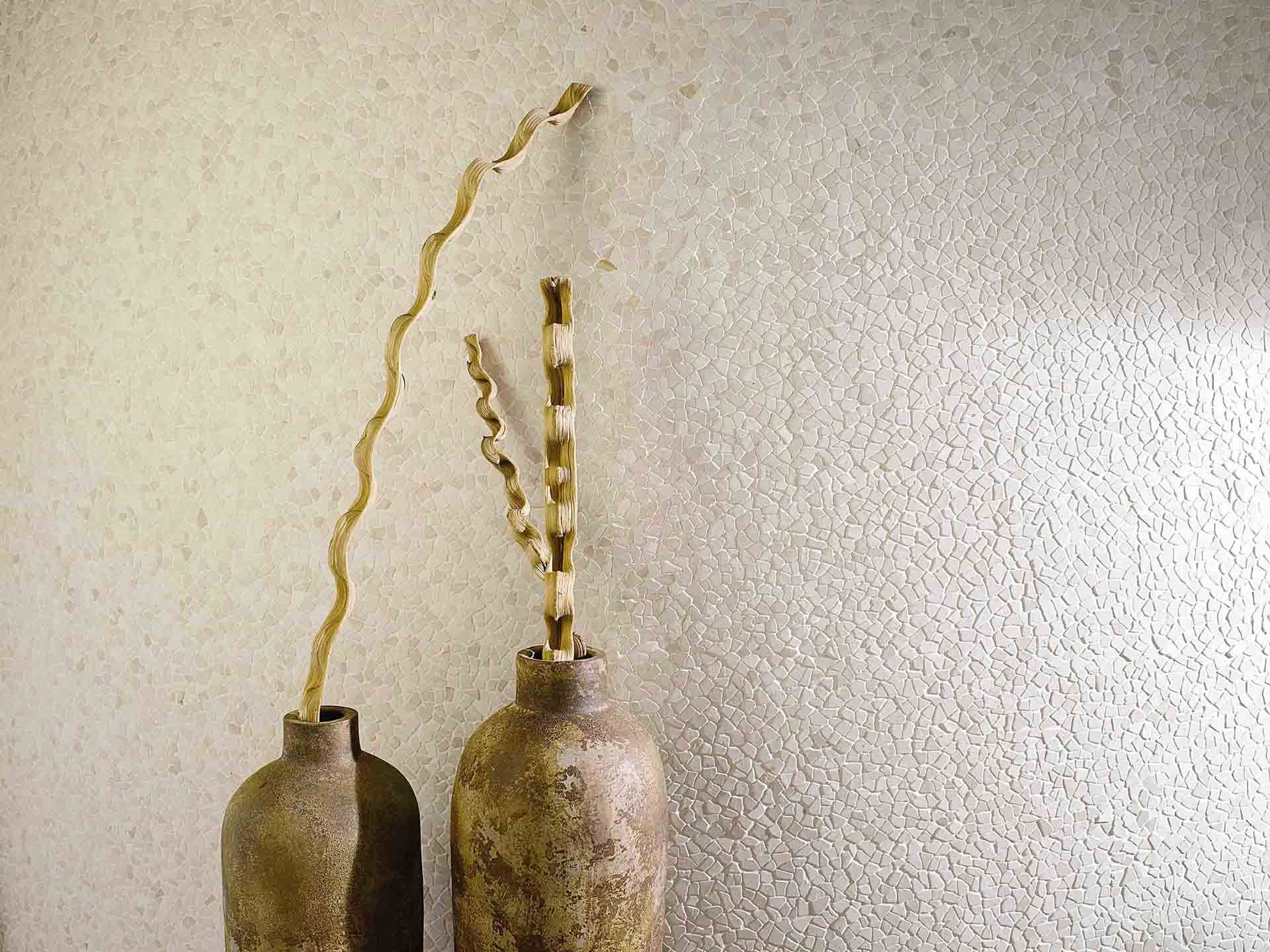
Paradise Tinybroken Edge Blanco
Textural crackle-effect white wall tile, 31×31cm. Wabi-sabi character for feature walls.
View TileJapandi Bathroom Vanity and Storage
In a Japandi bathroom, storage is never an afterthought — it is integral to the design. The goal is to keep surfaces clear without resorting to concealment alone. Open shelving, solid wood vanity units with honest joinery and visible grain, and wall-mounted shelves with simple peg rails all serve the dual purpose of keeping the space functional and keeping it beautiful.

British and independent makers are particularly well represented in this space, offering handcrafted solid wood vanity units that bring an authenticity no flat-pack alternative can replicate. The visible wood grain, the slightly irregular edge of a live edge shelf — these are wabi-sabi details that make a Japandi bathroom feel genuinely considered rather than simply styled.

When choosing a vanity unit, prioritise natural wood species — oak, walnut, or pine — with open lower shelving for neatly folded towels and baskets. Wall-mounted basin units keep floor space clear, reinforcing the airy, uncluttered feel central to Japandi design.
Japandi Bathroom Lighting
Lighting in a Japandi bathroom should feel like an extension of natural light rather than a replacement for it. Avoid harsh overhead spotlights in favour of layered, soft illumination — wall-mounted sconces either side of a mirror, a pendant above a freestanding bath, or backlit mirror panels that cast an even, diffused glow.
Frosted glass, rice paper shades and natural materials like rattan and washi all align with the Japandi aesthetic, softening the light source itself. Warm white bulbs (around 2700K) rather than cool white are essential — cool light works against the warmth Japandi is built on.
Natural light should be maximised wherever possible. Sheer linen curtains or simple slatted blinds allow light to filter through without exposing the space, maintaining the sense of privacy and calm that defines the Japandi bathing ritual.
Japandi Bathroom Lighting
Considered Lighting for a Serene Space

Holloways of Ludlow
Torrano Bathroom Wall Light
Natural stone and frosted globe. Available in brown, white, black and grey.
View Light
StudioHaran
Dawn Wall Light in Ceramic and Oak
Handcrafted in Falmouth. Speckled cream ceramic with solid oak backplate.
View LightJapandi Bathroom Mirror Ideas
The mirror is one of the most considered choices in a Japandi bathroom. Avoid ornate frames, heavily bevelled edges or anything that draws attention to itself. Instead, look for simple round or arch-topped mirrors in natural wood, aged brass or matte black — materials that echo the other elements in the space without competing with them.
A round mirror above a vessel basin is perhaps the most recognisable Japandi bathroom combination, its organic shape softening the clean lines of the surrounding tiles and vanity. For a more architectural approach, a full-length frameless mirror or a simple rectangular mirror with a thin solid wood frame both work beautifully within the aesthetic.
Backlit mirrors, while modern in feel, can work well in Japandi bathrooms provided the light is warm and diffused — choose models where the light source is completely hidden, leaving only the soft glow.
Japandi Small Bathroom Design
The principles of Japandi design are, if anything, better suited to small bathrooms than large ones. The emphasis on restraint, open floor space and purposeful editing means a small Japandi bathroom can feel far more spacious and serene than its square footage would suggest.

The key is to resist the temptation to fill every wall and surface. A single vanity unit with open shelving beneath, one carefully chosen mirror, a wall-mounted basin and a walk-in shower with a frameless glass panel — these elements, in the right combination, create a small Japandi bathroom that feels complete rather than compromised.
Large format tiles on both floor and walls reduce the number of grout lines and make the space feel larger and more continuous. Keeping the tile colour consistent between floor and wall — or choosing closely related tones — further enhances the sense of depth. A recessed shower niche replaces a separate caddy, maintaining clean surfaces without sacrificing storage.
Japandi Bathroom Accessories
The accessories in a Japandi bathroom are few, but each one is deliberate. A handmade ceramic soap dish. A solid wood shelf displaying a single plant. Towels in natural cotton or linen, folded neatly rather than rolled for effect. These small choices, made with care, are what transform a bathroom that looks Japandi into one that genuinely feels it.
British independent makers are ideal sources for Japandi bathroom accessories — their handcrafted pieces carry the irregularity and authenticity that mass-produced alternatives simply cannot replicate.
Shop Japandi Bathroom
Vanity Units, Storage & Accessories


Case Studies in Japandi Bathroom Design
The bathrooms below each embody the Japandi philosophy in different ways, combining clean lines, natural materials and a soothing colour palette to create serene and functional environments that draw on the best of both design traditions.

The first bathroom exemplifies the Japandi style through a harmonious blend of Scandinavian functionality and Japanese rustic minimalism. The use of wood throughout provides warmth and texture, contrasting with the smooth, matte finish of the tub and countertop. The layout is highly functional — a spacious freestanding bathtub, recessed open shelving and ample storage — reflecting the Scandinavian influence of prioritising functionality without compromising style. The colour palette is neutral, relying on the natural colour variations of wood and stone to add depth. Natural light plays an integral role, creating a bright and airy space that feels open and connected to the outdoors. The seamless integration of materials throughout displays a high level of craftsmanship — Japandi values quality and artisan craft, and it is evident here.

The second bathroom shines through its focus on a serene, clutter-free aesthetic and harmonious mix of Japanese and Scandinavian design elements. Wooden elements — the bathtub surround and shelving units — add organic warmth, a key quality in Japandi spaces that often utilise natural materials to create a sense of calm. The built-in shelving and seating area by the window serve dual purposes, providing storage while also offering a place to relax, embodying the Scandinavian principle of functional design. The cabinetry and woodwork showcase clean, simple lines with no unnecessary embellishments, emphasising craftsmanship and quality over quantity. The textured wall finish complements the smooth wood surfaces and the overall neutral colour palette typical of Japandi interiors. Pendant lights hanging above the tub are simple yet elegant, providing soft ambient light that enhances the tranquil atmosphere. The pebbles around the bathtub base and simple plant life echo the Japanese influence, incorporating elements of nature indoors for a balanced, zen-like environment.
By thoughtfully integrating these elements, you can create a Japandi bathroom that serves as both a practical space for daily rituals and a tranquil oasis for relaxation.
FAQs
What is a Japandi bathroom?
A Japandi bathroom blends Japanese and Scandinavian design principles to create a serene, minimalist space. It features natural materials such as wood and stone, a neutral colour palette of soft whites, warm greys and earthy taupes, and a focus on functional simplicity. Japandi bathrooms often incorporate elements of wabi-sabi — the Japanese philosophy of finding beauty in imperfection — alongside the Scandinavian concept of hygge, creating spaces that feel both calm and genuinely warm.
Is Japandi still a popular interior design style?
Yes, and for good reason. Japandi has moved beyond trend status to become a lasting design approach, particularly for those seeking a calmer, more considered home environment. Its emphasis on quality over quantity, natural materials and sustainability aligns closely with how many people now want to live. The timeless nature of the aesthetic means a Japandi bathroom designed today will feel just as relevant in ten years.
What are the key rules of Japandi style?
The core principles are minimalism — only what is needed and loved — natural materials including wood, stone, linen, bamboo and ceramic, a neutral and earthy colour palette, balanced contrast between warmth and restraint, and a commitment to quality craftsmanship. Decoration is intentional rather than accumulative. Each object is chosen for either its function or its quiet beauty.
What tiles work best in a Japandi bathroom?
Large format stone-look tiles in matte finishes work best — warm limestone tones, cool grey concrete effects, or soft sand and taupe. Avoid high-gloss finishes and heavily patterned tiles. Keeping the tile consistent between floor and wall, or using closely related tones, reinforces the sense of calm continuity that defines Japandi bathroom design. For a feature wall, a textural tile such as a crackle-effect or handmade ceramic adds a layer of wabi-sabi character without disrupting the overall palette.
What colours suit a Japandi bathroom?
Soft whites, warm creams, chalky greys, earthy taupes and muted greens all work beautifully. Farrow & Ball colours such as School House White, Shadow White, Shaded White and Drop Cloth are excellent choices for walls and woodwork. Deeper accents — dark charcoal, aged bronze, muted forest green — can be introduced through fixtures, towels and accessories to add depth without disrupting the overall calm.
How do I make a small bathroom feel Japandi?
Focus on restraint and continuity. Use large format tiles in a consistent tone across floor and walls, choose a wall-mounted basin to keep the floor clear, incorporate open shelving rather than bulky cabinets, and limit accessories to a handful of intentional pieces. A frameless shower screen, recessed niche and round mirror above the basin are the three design moves that most reliably transform a small bathroom into a convincingly Japandi space.
What is a typical Japanese bathroom?
A traditional Japanese bathroom is designed around the bathing ritual itself, typically divided into three separate areas. The changing room provides a space for undressing with storage for clothes and towels. The shower area is used for washing before soaking, typically with a stool and handheld shower. The ofuro — a deep soaking tub — is the centrepiece, allowing for a warm, meditative bath experience. Japanese bathrooms prioritise functionality, hygiene and tranquillity, all of which translate beautifully into the Japandi aesthetic.