
Japandi is the design philosophy that happens when two cultures arrive at the same conclusion from opposite ends of the world. Japanese wabi-sabi — the appreciation of imperfection, natural materials and quiet craftsmanship — meets Scandinavian hygge, with its warmth, functionality and instinct for comfort. The result is a japandi style that feels genuinely restful: unhurried, uncluttered, and deeply considered.
It is not a style that demands perfection. A worn oak surface, a hand-thrown ceramic, a linen cushion that has been slept on — these are not flaws in a japandi interior. They are the point.
Japandi Living Room Ideas
The living room is where japandi interior design earns its reputation. Pale walls, low-slung furniture, natural textures and a deliberate absence of visual noise create a space that slows you down the moment you walk in.

Farrow & Ball School House White is one of the most sympathetic colours for a japandi living room — warm enough to prevent the space feeling clinical, pale enough to keep it open and light. Built-in shelving is the japandi approach to living room storage: open, considered, and styled with intention rather than hidden behind closed doors. Here, white ceramics, woven baskets and a single piece of art are arranged with deliberate restraint — nothing extraneous, nothing added without purpose. The boucle armchair, round floor mirror and herringbone oak floor layer texture without breaking the calm.

Wevet on the walls with All White on the woodwork is a pairing that appears repeatedly in japandi interiors. The contrast is barely-there — a whisper rather than a statement — which keeps the architecture as backdrop rather than feature. The low, generous beige sofa, marble coffee table and single black wall sconce do the visual work without competing. The natural jute rug anchors the seating — if you’re choosing a beige living room rug for a japandi scheme, look for flat weaves or natural fibres over deep pile.

Slipper Satin brings slightly more depth than Wevet — a gentle warmth that reads as cream in daylight and honey by lamplight. Against pine floorboards and a charcoal rug, it grounds a neutral palette without tipping into beige. The slim black floor lamp and single framed artwork are exactly the kind of restrained editorial choices that define japandi style.
Shop This Look


Japandi Kitchen Ideas

A japandi kitchen is built around honest materials and clean joinery. Oak cabinetry — unfussy, handle-light or with slim recessed pulls — sits alongside stone or marble surfaces chosen for their natural variation rather than uniformity. Archive on walls and ceiling unifies the space, its warm biscuit tone picking up the honey tones of the oak and the caramel veining in the marble.
The paper pendant light overhead is a recurring motif in japandi kitchen design: organic form, soft diffused light, zero visual weight. The herringbone parquet underfoot introduces movement and craft without breaking the calm. For more japandi kitchen ideas including cabinetry, worktops and styling, see our full guide to japandi kitchens.
Japandi Bedroom Ideas

The japandi bedroom is designed for sleep, not performance. Low beds, natural linen, a single pendant overhead — the deliberate absence of spotlights, upholstered headboards and layered accessories is what gives the room its quality of stillness. Mouse’s Back, a deep earthy taupe, gives weight and intimacy without darkness, while Pointing on the woodwork and ceiling prevents the space from feeling enclosed.

For the japandi bed frame itself, a low platform design in natural wood is the defining piece. The Mosswood Solid Wood Platform Bed by TheHonestPlank on Etsy — captures the look well, with its exposed wood frame and built-in bedside shelf removing the need for a separate bedside table. For more bedroom inspiration in this palette see our beige bedroom ideas.
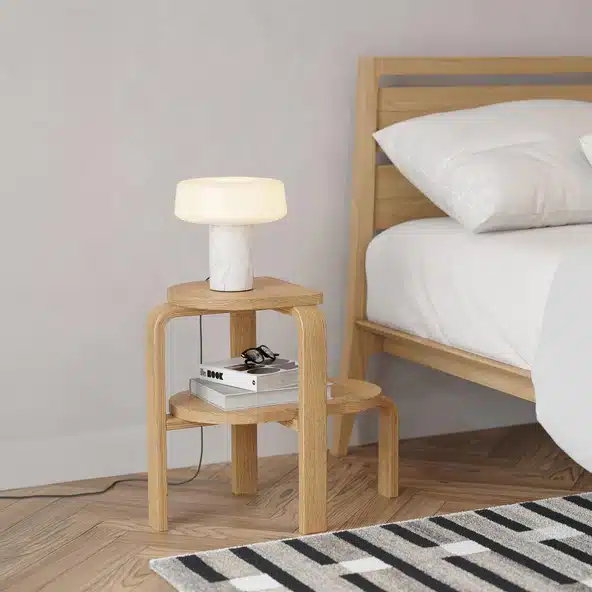
The Case Furniture Altura Step Stool in bentwood oak works beautifully as a bedside alternative — its open tiered form holds a lamp, a book and nothing else, which is precisely the point.
Japandi Dining Room Ideas
The japandi dining room is defined by one well-chosen table and enough empty space around it to breathe. No centrepiece clutter, no mismatched chairs, no overhead chandelier competing for attention. Just honest oak, clean lines and the kind of stillness that makes a meal feel considered.
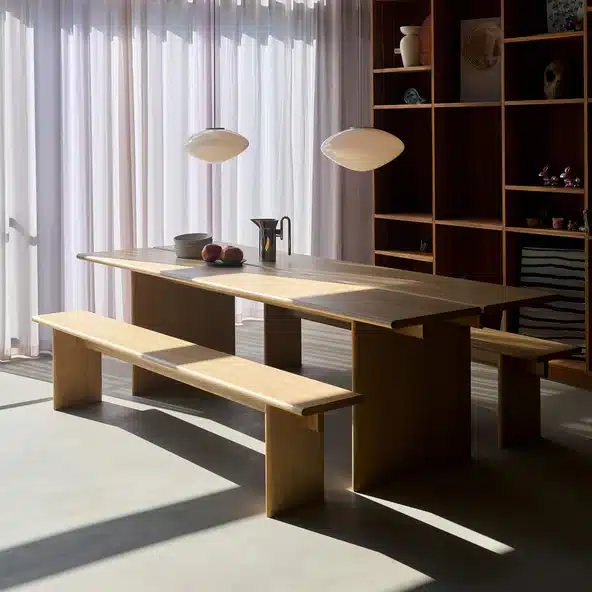
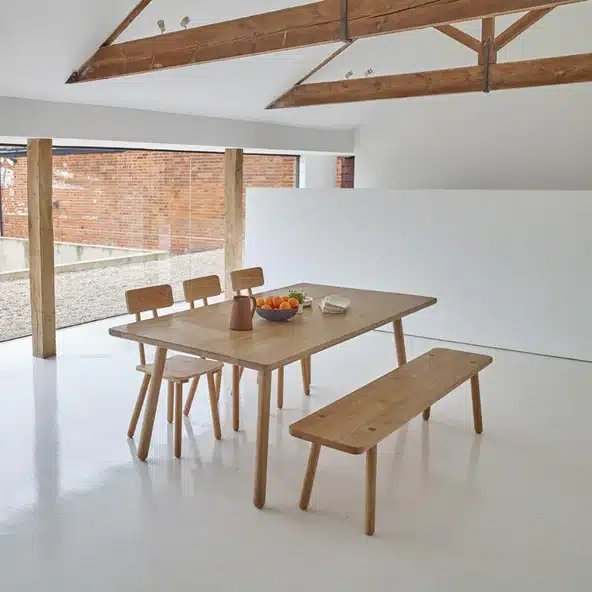
The &Tradition Ita Dining Table in oak — with its slab-like monolithic form and pale wood surface — is one of the most architecturally resolved japandi dining tables available at any price point. Paired with the Another Country Bench One, the combination achieves exactly what japandi dining asks for: two pieces from different makers that share the same quiet vocabulary. For more inspiration see our dining room ideas.
Japandi Colour Palette
School House White
Pale chalky white with warmth. Walls, ceilings, woodwork.
Wevet
The softest off-white. Walls in light-filled rooms.
Slipper Satin
Warm cream. Living rooms, hallways, bedrooms.
Archive
Warm biscuit. Kitchens, utility rooms, connecting spaces.
Mouse’s Back
Deep earthy taupe. Feature walls, bedrooms, cabinetry.
Pointing
Creamy white. Woodwork, ceilings, trims throughout.
FAQs
What does Japandi mean?
Japandi is a portmanteau of Japan and Scandinavia — a hybrid interior design style that combines Japanese wabi-sabi, the philosophy of finding beauty in imperfection and natural materials, with Scandinavian hygge, the pursuit of warmth, comfort and functional simplicity. The result is a style that is minimalist without being cold, and considered without being precious.
Is Japandi still in style in 2026?
Yes — and for good reason. Japandi has moved beyond trend status into something more enduring because it is rooted in philosophy rather than aesthetics. Its emphasis on natural materials, longevity and intentional living aligns with growing interest in sustainability and slower consumption. It is less a passing trend and more a quietly permanent shift in how people want their homes to feel.
What are the 7 rules of Japandi home style?
There are no strict rules, but seven principles define the style: use natural materials throughout; keep a warm neutral colour palette; choose furniture for longevity over trend; avoid clutter and display only what is intentional; layer texture rather than pattern; use soft ambient lighting rather than harsh overhead light; and embrace imperfection — a worn surface or hand-thrown ceramic is an asset, not a flaw.
What are the best colours for Japandi?
The japandi colour palette favours warm neutrals: off-whites, soft creams, earthy taupes and muted greens. Farrow & Ball colours that work particularly well include Wevet, School House White, Slipper Satin, Archive, Mouse’s Back and Pointing. Avoid stark white or cool grey — japandi warmth comes from choosing neutrals with a yellow or brown undertone rather than a blue one.
What are common Japandi decor mistakes?
The most common mistake is confusing japandi with stark minimalism — removing warmth along with clutter. Others include using cool grey instead of warm neutral tones, choosing furniture that is too uniform or matched, overlooking texture in favour of smooth surfaces, and over-lighting a space with recessed spotlights when a single floor lamp or pendant would serve the room better.
Why is Japandi so popular?
Japandi resonates because it offers something genuinely rare in interior design: a style that feels both aspirational and liveable. It does not require perfection, an unlimited budget or a complete renovation. Its focus on natural materials, craftsmanship and calm reflects a wider cultural shift away from excess — and its timeless quality means it never needs updating.