
Some of the most beautiful rooms break every rule. They mix old with new, bold with subtle, collected with considered — and somehow it all works. That’s the magic of eclectic interior design.
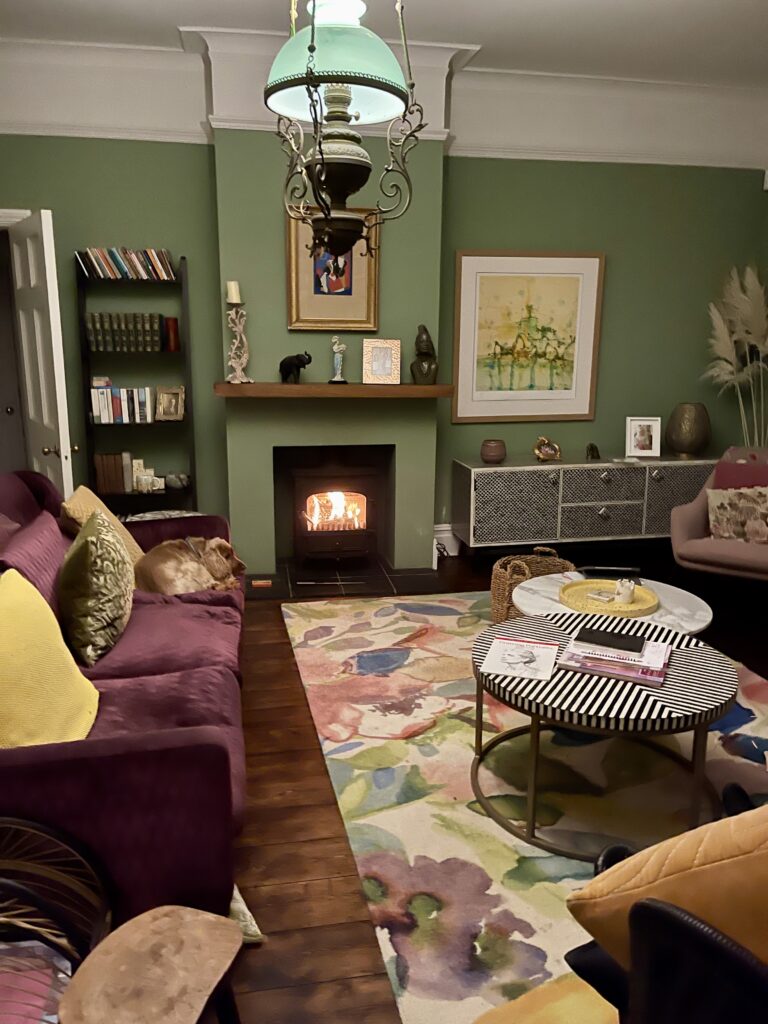
Where other styles demand consistency, eclectic design celebrates contrast. It’s the purple velvet sofa beside the vintage oil lamp. The watercolour rug under the rattan chair. The mantelpiece that tells the story of a life actually lived. If you’re starting with your living room, our living room ideas are a great place to begin.
The sofa you see here is the William Yeoward Glebe — found brand new on eBay. The rug is by Scottish design studio Bluebellgray. It has survived two continents, countless house moves, and let’s just say some very thorough testing by our dog. Still beautiful. For a warm, grounding base colour that works brilliantly with eclectic style, take a look at our guide to mustard colour in the home.
Done well, an eclectic room feels more personal, more layered, and more alive than any single-style space ever could.
So what makes it work — and how do you avoid it tipping into chaos? Here’s everything you need to know.

Eclectic design isn’t confined to one look — or even one country. This was our living room in Australia, a space we renovated into open plan living. A mustard yellow rug anchors the space, the green rattan chaise adds a vintage note, and the black feature wall gives everything else permission to be bold. The living room lighting ideas here — rattan pendants and a statement ceiling fan — show how lighting can be as characterful as any piece of furniture. Different hemisphere, same philosophy — collect what you love and let it breathe.

Key Characteristics of Eclectic Interior Design
Blend of Materials and Textures: In eclectic design, you’re not confined to a single material or texture. You can seamlessly mix leather, metal, glass, and wood. The idea is not just to throw things together, but to combine them in a way that adds depth and visual interest to the space.
Amalgamation of Time Periods: One of the signature traits of eclectic design is the mix of different eras and styles. From Mid-Century Modern tables to antique wall mirrors, the key is to blend these elements cohesively. This approach makes your living space a testament to design through the ages, with each piece contributing to a narrative.
Personal Elements: The eclectic style allows for personal expression, but it’s not a free-for-all. You can showcase artifacts from your travels or family heirlooms, but the placement should be considered. The aim is to create a space that reflects you, but still feels harmonious.
Strategic Use of Colour and Pattern: Eclectic design definitely opens up the colour palette and allows for a mix of patterns. However, it’s often helpful to maintain some level of consistency. You might choose a colour or pattern that reappears throughout the room to tie everything together.
Balance and Proportion: Mixing different elements doesn’t mean disregarding balance. The eclectic style calls for a calculated approach to ensure the space doesn’t become overwhelming. For instance, if one side of the room features heavy or dark furniture, try to balance it with lighter elements on the opposite side.

Unexpected Combinations: This is where you can get a bit creative and adventurous. An eclectic room often features a few surprising pairings—like a modern art piece hanging above a vintage sofa—that somehow work together to create a unique, dynamic space.
Layering for Depth: While eclectic design encourages a multi-layered approach, the layering should be purposeful. It’s not just about stacking rugs or using multiple cushions; it’s about adding layers that offer different textures or dimensions to create a rich environment.
Flexibility: One of the appealing aspects of the eclectic style is its adaptability. You’re not committed to any one period or style, which means the space can evolve over time as your own tastes and lifestyle change.
Artistic Cohesion: In an eclectic space, every choice becomes part of a larger composition. Each piece, whether it’s furniture or a decorative item, serves a role in the greater visual and functional scheme of the room.
In essence, eclectic interior design offers a high degree of freedom, but it also requires a keen eye for cohesiveness and balance. You’re combining disparate elements to tell a story—a story that is uniquely yours but is also harmonious and visually pleasing. If done right, the eclectic style results in a space that is rich in visual interest and deeply personal.

The secret to this eclectic dining room is the mismatched seating — mint green, black, natural wood and brown leather all around one simple table. No two chairs match. The room is better for it.

An antique wooden cabinet, exposed brick, polished concrete floors and a bright blue rug — this eclectic apartment proves that rough and refined can not only coexist, but thrive together.

A rope swing suspended from exposed beams. A bouclé armchair beside a bright coloured sofa in deep purple velvet. Floor to ceiling books. A glass top coffee table grounding it all. This room commits to the unexpected at every turn — and it works completely.

Eclectic Design in the Real World
The best way to understand eclectic interior design isn’t to read about it — it’s to see it lived in. Our own living room, with its Bluebellgray watercolour rug, William Yeoward Glebe sofa and collected objects from a life well travelled, is proof that eclectic style is less about budget and more about confidence.
A recent stay at Artists Residence London reminded us just how powerful eclectic design can be when every choice is made with conviction. From chinoiserie wardrobe doors to a sideboard clad in vintage biscuit tins, it’s a masterclass in mixing eras, textures and personalities into something that feels completely cohesive.
The secret? Trust your eye. Buy what you love. Mix what you have. And don’t be afraid to let your home tell your story.
Further Reading
If you love the layered, collected feel of eclectic interior design, these Artisan Haus features offer more inspiration for colour, pattern, travel-inspired interiors and characterful styling.
FAQs
What is eclectic interior design?
Eclectic interior design is a style that deliberately mixes elements from different periods, cultures and aesthetics to create a space that feels personal and layered. Rather than following a single style rulebook, eclectic design celebrates contrast — pairing old with new, bold with subtle, and collected with considered.
What does eclectic design mean?
At its heart, eclectic design means freedom with intention. It’s the art of combining pieces that shouldn’t work together and making them feel completely cohesive. The key word is intentional — eclectic is not the same as random.
What defines eclectic interior design?
The defining characteristic is confident mixing. Eclectic rooms typically feature a blend of time periods, textures, patterns and cultural influences, united by a consistent colour palette or a strong anchor piece that holds everything together.
What are the rules of eclectic interior design?
There are no strict rules — but there are principles. Choose one dominant colour palette to create cohesion. Let one hero piece lead the room. Mix textures deliberately. And edit ruthlessly — eclectic doesn’t mean cluttered.
Is eclectic design hard to pull off?
It can feel daunting, but the secret is to start with what you love rather than what matches. Buy pieces that mean something, mix textures and eras with confidence, and trust your eye. A room that tells your story will always feel right.
What does eclectic interior design look like?
Think a vintage leather chair beside a contemporary sofa. A bold gallery wall above a mid-century sideboard. A handmade rug under a modern coffee table. It looks personal, layered and alive — like a room that has been collected over time rather than bought all at once.
What is an example of eclectic style?
Our own living room is a good example — a William Yeoward Glebe sofa in deep purple velvet, a Bluebellgray watercolour rug, a vintage oil lamp pendant and a mantelpiece covered in collected objects. No two pieces are from the same era. The room feels completely cohesive.
What is the 3-5-7 rule in interior design?
The 3-5-7 rule refers to grouping decorative objects in odd numbers — three, five or seven items together rather than two or four. Odd numbers create a more natural, dynamic arrangement that feels collected rather than staged. It’s a simple principle that works particularly well in eclectic spaces where you’re layering multiple objects together.
There is sponsored content on his page