
Room divider ideas have come a long way from the folding screen in the corner. Whether you’re zoning an open-plan living space, creating a home office in a bedroom or adding architectural interest to a plain room, the right divider can change how a space feels entirely — without a single wall. From floor-to-ceiling wooden slats and glass partitions to open shelving, curtains and natural materials, these are the room divider ideas worth knowing about.
Open Shelving Room Divider Ideas
Open shelving works as a room divider because it defines space without closing it off. A well-placed shelving unit creates a clear boundary between a living area and dining room, a kitchen and a sitting room, or a bedroom and a home office — while keeping light flowing freely between the two zones.

The most effective open shelving room dividers have visual weight on both sides. Fill them with a mix of books, plants and objects rather than leaving shelves bare, and the unit reads as a considered design feature rather than a piece of furniture that happens to be in the way.
In this open-plan space, the shelving does double duty — dividing the dining area from a marble-topped kitchen island, its warm wood cladding echoing the same tones as a wood panel wall elsewhere in the room. A tan leather sofa anchors the living zone beyond, giving the whole space a shared material language even though the shelving splits it in two.

For a more architectural approach, a floor-to-ceiling bookcase brings real presence to an open-plan space — it has enough visual weight to define two distinct zones while the open structure keeps light and sightlines intact. It works particularly well in studio apartments where every element needs to earn its place.

Floor to Ceiling Room Divider Ideas: Wooden Slats
Wooden slats zone a space decisively while letting light pass through. The vertical rhythm draws the eye upward, making rooms feel taller, and the natural timber brings warmth that glass or metal partitions rarely match.

The Georgina by RobertRoseCarpentry is one of the most searched wooden wall partitions on Etsy UK — and it’s easy to see why. Here it divides an open plan kitchen diner and living room without closing either space off, letting light pass freely between the two zones. It’s a particularly effective solution for living room divider ideas in newer builds where open plan layouts are standard but a little separation between cooking and relaxing is genuinely useful.

The same partition works just as well in a hallway, where it creates a sense of arrival and adds character to what is often the most overlooked space in a house.

From one angle, you see how these slats create a secluded nook with bean bags, establishing a casual, intimate area for relaxation or reading, set apart from the rest of the loft. This view emphasises the wall partition’s role in creating privacy without complete separation, as light and visual elements still flow through the space.

The consistent use of materials and the rhythmic pattern of the slats across the two images underscore the thoughtfulness of the design, making the loft feel expansive and unified despite the distinct areas within it.

In a Japandi-style living room, a floor-to-ceiling slat divider in warm oak sits naturally against white walls and muted flooring — the vertical rhythm adding structure without weight.

The Georgina works equally well separating a living area from a dining room — the slats define the boundary clearly while keeping both spaces feeling generous rather than divided.

In a bedroom, the same partition creates a sleeping zone from a dressing area or home office — more considered than a curtain, less permanent than a wall.
Room Divider Screens
Room divider screens come in a multitude of styles and materials, making them a versatile choice for any space. From elegant folding screens with intricate designs to modern, minimalist panels, these dividers can be customised to suit your interior design preferences. They’re excellent for creating temporary partitions in open spaces or adding a decorative element that serves a functional purpose.
For a full guide, see our room divider screens article.
Glass Wall Partitioning
Glass partitions are the most architectural of all room divider options — they divide space completely while keeping light flowing freely. Black steel frames have become the dominant choice for contemporary interiors, adding definition and a crispness that timber can’t match.

In a bedroom, a glass partition works as one of the most considered bedroom divider ideas — it screens a dressing area or walk-in wardrobe without making the room feel smaller or darker. Frosted glass gives privacy without sacrificing light.

For a bespoke made-to-measure option, SteelDoorSolutions on Etsy makes internal steel doors with an ultra-slim profile in fire-rated glass — the kind of partition that looks architectural rather than added as an afterthought.

Black-framed glass partitions work especially well in loft apartments and open-plan kitchens where the industrial aesthetic is already established. The steel frame adds structure; the glass keeps the space connected.

In a studio apartment, a glass and wall combination is one of the smartest room divider ideas available — it creates a genuine sleeping zone without the claustrophobia of a solid wall, and the transparency means both sides benefit from the same light source.
Partition Room Divider Ideas

A full-height wall partition is the most permanent of all room divider ideas — it creates a genuine room within a room while still feeling considered rather than thrown up. The key is the material choice: stone, plaster or timber cladding at this scale reads as architecture rather than furniture.

In a studio apartment, a timber-clad full-height partition carves out a proper sleeping zone — the wood surface brings warmth, and a bold mural on the bedroom side turns what could feel like a box into something with real character. Built-in shelving integrated into the divider maximises every centimetre.
Curtain Room Divider Ideas
Curtain room divider ideas are the most flexible and affordable option — they can be drawn back entirely, making them ideal for spaces that need to adapt. The fabric choice matters: a heavyweight linen reads as considered and permanent, while a sheer panel keeps things light and airy.

A floor-length curtain in a neutral tone softens the harder lines of a timber-clad TV wall while giving the option to close off the space entirely for a more intimate viewing experience.

In the context of modern TV area design, this room above cleverly utilises a curtain divider to craft a flexible and stylish space. The curtain, in a soothing neutral shade, stretches across the area, providing a soft, textural contrast to the clean lines and wood panel walls of the surrounding elements. This curtain not only enhances the aesthetic appeal but also offers practical advantages, such as the ability to easily adjust the separation between the living area and other parts of the home. It serves as a fluid and versatile partition that can be drawn to obscure the TV area for a more intimate viewing experience or left open to maintain a sense of spaciousness.
Plant and Living Wall Room Divider Ideas
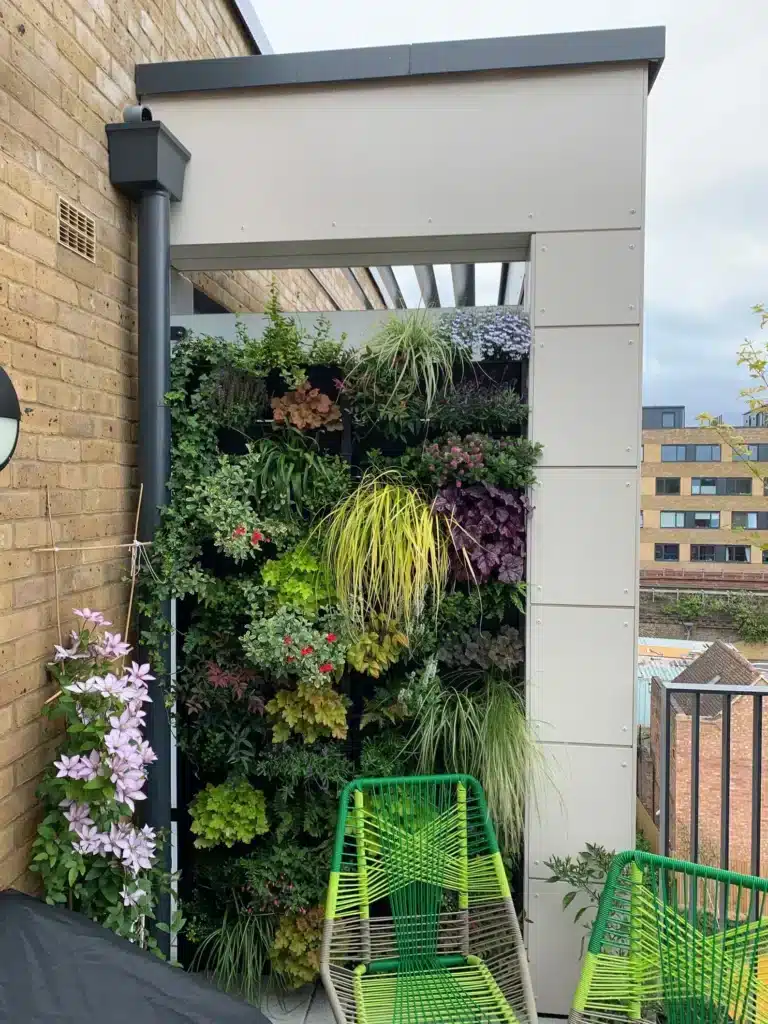
A vertical living wall brings the same zoning effect as a built partition but with texture and life that no other material can match — particularly effective in open-plan spaces where a hard divide would feel oppressive.

In this space below, the black console tables are used as elegant room dividers that offer a light, modern touch. The slim profile and open design of these tables ensure that they divide the room without making it feel smaller, or closed off. Their linear structure and dark colour provide a visual anchor in the space, offering a stark contrast against the light walls and floor.

Whatever approach you choose, the best room dividers are the ones that feel like they were always meant to be there — not added as an afterthought but considered as part of the design from the start.
Frequently Asked Questions
What is the cheapest way to divide a room?
A curtain hung from a ceiling-mounted track is the most budget-friendly option — you can divide a room for under £50 using a tension rod or simple ceiling hooks with eyelet curtains. Open shelving units from flat-pack retailers are the next step up, offering division plus storage without the cost of bespoke joinery.
What can I use in place of a room divider?
Almost anything with height and visual presence works: a large bookcase, a row of tall indoor plants, a folding screen, or a console table styled with trailing plants and books. In open-plan spaces, a sofa positioned with its back to the room creates a psychological divide without any physical barrier at all.
How to split a room in half on a budget?
Define two zones with rugs — one per area — then use furniture placement to reinforce the divide rather than buying a dedicated room divider. A large pendant light centred over each zone signals separate spaces to the eye. Curtains, pegboard panels and freestanding shelves all cost less than fitted solutions and can move with you.
How can I partition a room without building walls?
Freestanding options include folding screens, open bookcases, sliding barn doors on a ceiling track, curtain dividers, and living wall planters. For a more permanent feel without structural work, a double-sided shelving unit fixed to the floor — not the walls — gives the solidity of a partition with none of the planning implications.