
Garden paths do more than get you from A to B. The right path material and layout can completely change how a garden feels — a gravel path winding through billowing planting reads as relaxed and cottage-like, while clean-edged pavers in a straight line suit a more contemporary space. Whether you’re working with a sprawling plot or a compact courtyard garden, choosing the right path is one of the simplest ways to add structure and character to a garden.
Gravel paths

Gravel is one of the most versatile path materials for a UK garden. It drains well, it’s inexpensive to lay compared with paving, and it works equally well in a formal courtyard or winding through cottage-style planting. Self-binding gravel gives the cleanest, most stable finish underfoot, while loose gravel suits a more relaxed, textured look. Edging with timber, brick, or steel keeps stones contained and stops them migrating into borders.
Steel edging in particular gives a gravel path a crisp, contemporary line, especially where the path curves — see garden edging ideas for more on choosing between timber, brick, and steel borders.

Japanese-style garden paths

Large, irregular paving slabs set within a border of rounded pebbles create a path with a distinctly Japanese character — calm, textured, and low-maintenance once established. Bamboo, acers, and a stone lantern alongside the route reinforce the look without needing a full garden overhaul. This style pairs particularly well with the planting covered in Japanese plants for a UK garden, and suits the wider restrained, gravel-led approach used in zen garden design. Where gravel forms the bulk of the path surround rather than lawn or borders, it also overlaps with the ideas in gravel garden ideas.
Stepping stone paths

Stepping stones bring an informal, meandering feel that suits smaller or densely planted gardens particularly well, letting foliage spill over the edges without overwhelming the route. Large flat stone slabs set into gravel or lawn create a path that feels like it’s grown into the garden rather than been imposed on it — a good option where you want planting to stay the star of the show.
Natural stone steps for a sloped garden

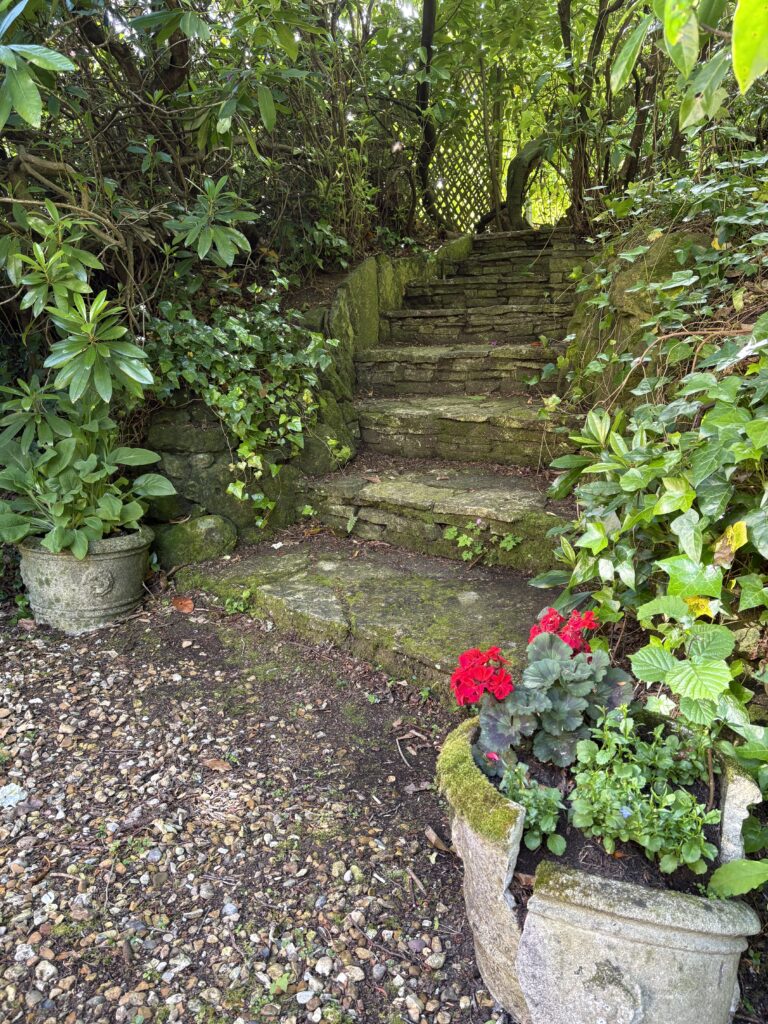
Where a garden isn’t level, a path needs to work as steps as well as a walkway. Chunky, irregular stone blocks set into a slope, backfilled with loose pebble, create a naturalistic staircase that feels more like a woodland trail than a built structure. It’s a practical solution for a change in level, and the informal stone shapes suit a garden with plenty of greenery around the path edges — ferns and other shade-tolerant planting work particularly well here.
Brick and paver paths

For a more structured, permanent path, brick or clay pavers bring warmth and traditional character, especially in period or cottage gardens. Herringbone and basketweave laying patterns add visual interest without competing with planting, and reclaimed brick in particular develops a lovely weathered patina over time.
Curved vs straight paths

A straight path draws the eye directly to a focal point and suits smaller plots where you want to create a sense of length and structure — the walled path here, lined with clipped box and spring tulips, shows how effective this can be even in a fairly narrow space. A curved path, by contrast, slows the pace and makes a garden feel larger than it is by concealing what’s ahead — a useful trick worth combining with ideas from small garden ideas when space is tight.

Cottage-style paths

A meandering path bordered by billowing planting — lavender, geraniums, alchemilla — is the hallmark of a classic English cottage garden. Gravel and reclaimed brick both suit this look well, and leaving planting to soften the path edges (rather than keeping a hard, defined border) makes the whole space feel established and unplanned. For more on building this look throughout a garden, see cottage garden ideas.
Low-maintenance path ideas

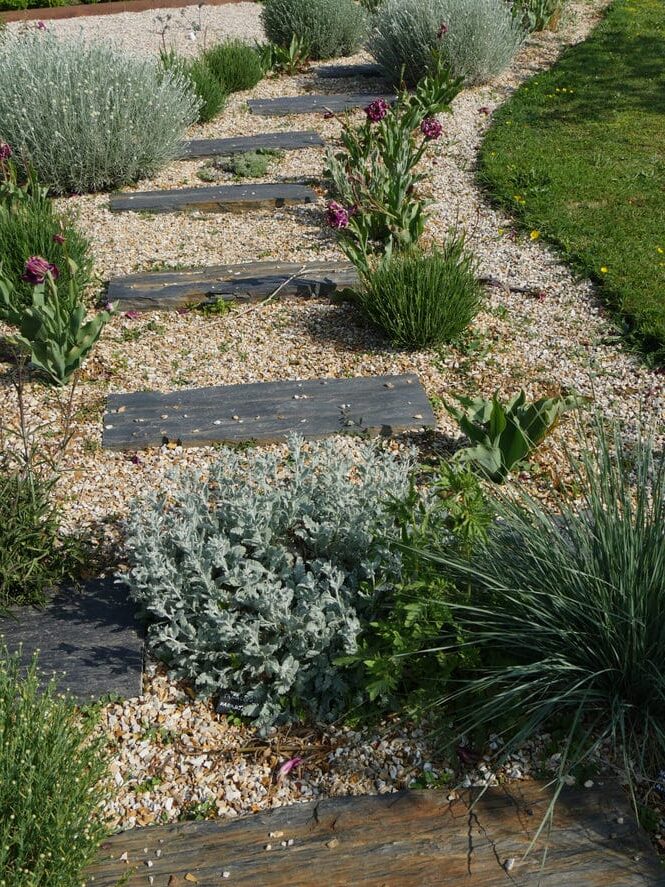
For a path that needs little upkeep, resin-bound gravel and porcelain paving are worth considering — both resist weeds far better than loose gravel or natural stone with open joints. Timber sleepers set directly into gravel, as shown here, give a similar low-maintenance route with the bonus of a firm, non-slip surface underfoot. Keeping planting slightly back from path edges also reduces the need for regular trimming to stop growth encroaching on the walkway. Where a path runs through a shaded or damp corner of the garden, materials with good grip (textured stone or brushed concrete rather than smooth pavers) help avoid a slippery surface — worth cross-referencing against garden shade ideas if a shaded section features prominently. For more low-upkeep planting to pair with a path like this, see low-maintenance garden designs.
Lighting a garden path

Path lighting adds both safety and atmosphere once the sun goes down. Low-level solar bollards or spike lights set along the path edge give a soft, even glow without the glare of overhead lighting, while festoon or fairy lights strung above a path suit a more relaxed, cottage-style scheme — see outdoor party lighting ideas for more on stringing lights through planting for evening gatherings. For a more architectural look, recessed LED lights set flush into paving or steps create a subtle uplight without visible fittings. Browse more outdoor lighting for further options to suit different path styles.

A garden path is a small detail with an outsized effect on how a garden feels to move through — practical enough to guide the way, but with real scope to add character through material, shape, and planting. Whether the choice is a formal run of pavers or a gravel path disappearing into cottage borders, getting it right ties the whole garden together.
FAQs
What is the cheapest way to make a garden path?
Gravel is generally the most affordable path material, since it requires no specialist tools or skilled labour to lay. A simple weed-suppressant membrane topped with loose gravel, edged with timber or bricks salvaged from elsewhere in the garden, keeps costs to a minimum.
What are some cheap ideas for making garden paths?
Reclaimed materials bring the cost down further — broken paving slabs, salvaged bricks, or bark chippings can all be used instead of buying new. Repurposing offcuts of timber as sleepers, or laying stepping stones spaced apart rather than a full solid path, also reduces the amount of material needed.
Can I lay stepping stones straight onto grass?
Yes, though for stability it’s best to lift the turf beneath each stone and bed it into a shallow layer of sand or hardcore rather than resting it directly on the lawn surface. This stops the stone rocking underfoot and keeps it sitting flush with the grass.