
While structure shapes the space, planting brings a shaded garden to life. Choosing the right plants for shade in UK gardens ensures your design feels lush, layered and full of interest throughout the seasons — even in the darkest corners.

🌿 Shade Loving Plants for Structure and Foliage
For a calm, immersive feel, focus on foliage first. Shade loving plants such as ferns and hostas create softness and movement, while larger-leaved varieties add a bold, architectural presence that anchors the space.

🌿 Ferns: Soft Texture for Shaded Gardens
Lush, feathery and quietly elegant, ferns bring a sense of softness and movement to shaded spaces. Their layered fronds unfurl in rich shades of green, creating a natural, woodland feel that instantly makes a garden feel more established and immersive.
Perfect for deeper shade, ferns thrive in conditions where many other plants struggle, making them one of the most dependable plants for shade in UK gardens. They work beautifully when planted in drifts beneath trees or paired with broader leaves to create contrast, adding texture and depth without overwhelming the space.
Low maintenance and reliably resilient, ferns are ideal for creating that calm, grounded atmosphere that defines a well-designed shade garden.

🌿 Hostas: Lush Foliage for Light and Contrast
Generous, sculptural and full of character, hostas are a cornerstone of shade planting. Their broad, layered leaves — ranging from deep green to silvery blue and variegated tones — catch the light beautifully, helping to brighten even the dimmest corners.
Thriving in partial to full shade, hostas are among the most versatile shade loving plants for UK gardens. They are particularly effective when used in groups, where their repeating forms create rhythm and structure, or in containers where their bold foliage can take centre stage.
While they do require some protection from slugs, their impact is undeniable — bringing fullness, contrast and a sense of quiet luxury to shaded borders and patios alike.
Create the look with these carefully chosen shade loving plants, selected for structure, texture and colour.

Affiliate Pick
Hosta Slug Resistant Collection
Looking for reliable shade loving plants with bold foliage? This hosta collection is a lovely option for shaded borders, woodland-style planting and containers, with tougher leaves chosen for improved slug resistance.
- Ideal for shaded borders and pots
- Bold, architectural foliage
- Selected for better slug resistance
- Easy, low-maintenance planting
🌿 Fatsia Japonica: Bold Structure for Shaded Gardens
Glossy, sculptural and quietly dramatic, Fatsia japonica brings instant presence to shaded spaces. Its large, hand-shaped leaves catch and reflect what little light filters through, creating contrast against softer planting and adding depth to darker corners.
Ideal for north-facing borders or sheltered patios, fatsia thrives in shade and partial shade, making it one of the most reliable plants for shade in UK gardens. It works beautifully as a backdrop to more delicate foliage like ferns, or as a standalone statement in a container where its architectural form can really shine.
Low maintenance and evergreen, it provides year-round structure — anchoring your planting scheme even in winter when other plants fade back.

Affiliate Pick
Fatsia japonica ‘Spider’s Web’
Looking for shade loving plants with real presence? Fatsia japonica ‘Spider’s Web’ is a striking choice for shaded borders and sheltered patios, with bold, architectural leaves beautifully flecked with creamy white.
- Ideal for shaded borders and containers
- Bold, architectural evergreen foliage
- Variegated leaves for extra visual interest
- Lovely for adding structure year-round
🌸 Flowering Plants for Shade UK Gardens
Shade doesn’t mean sacrificing colour. Many plants that like shade in the UK produce delicate, seasonal blooms that bring light and contrast to darker areas, particularly when layered among greenery.
🌸 Hellebores: Winter Colour for Shaded Gardens
Delicate yet resilient, hellebores bring a quiet beauty to shaded spaces, flowering when much of the garden is still at rest. Their soft, nodding blooms — in shades of creamy white, dusky pink and deep plum — add subtle colour and interest, lifting darker corners during the colder months.

Well suited to woodland-style planting, hellebores are among the most reliable shade loving plants for UK gardens, thriving in partial to full shade with very little maintenance. Their evergreen foliage provides structure throughout the year, while their early blooms offer a welcome sense of life and movement at the end of winter.
Planted beneath trees or woven through softer greenery, hellebores create a natural, layered look that feels both relaxed and refined — making them an essential choice for anyone designing a garden with year-round appeal.
🌸 Astilbe: Feathery Colour for Shaded Gardens
Soft, airy and full of movement, astilbe brings a lighter touch to shaded planting schemes. Its plume-like flowers rise above finely cut foliage in elegant shades of blush pink, white, coral and deep rose, adding colour without disturbing the calm, layered feel of the space.

Well suited to moist, partially shaded spots, astilbe is one of the most beautiful plants for shade in UK gardens, particularly where you want a more romantic, cottage-garden softness. It pairs beautifully with hostas and ferns, its delicate flower heads contrasting with broader leaves and deeper greens.
Flowering through summer, astilbe helps brighten darker borders with a gentle, cloud-like effect, making shaded areas feel more inviting, textured and alive.
If you want, I can also help you decide whether any of your current plant list should be cut so the section stays focused rather than too long.

🌸 Bleeding Heart: Romantic Elegance for Shaded Spaces
Graceful and quietly enchanting, bleeding heart brings a soft, romantic quality to shaded gardens. Its arching stems are lined with delicate, heart-shaped flowers that appear to float above finely cut foliage, creating a sense of movement and lightness.

Thriving in partial shade, bleeding heart is one of the most charming shade loving plants for UK gardens, particularly suited to woodland-style borders or sheltered corners. Its early blooms add interest in spring, just as the garden begins to awaken, making it a valuable addition to layered planting schemes.
Paired with ferns or hostas, it softens stronger shapes and introduces a more delicate, storybook feel — perfect for creating a garden that feels both relaxed and thoughtfully composed.

🌸 Foxgloves: Vertical Elegance for Shaded Borders
Tall, graceful and instantly recognisable, foxgloves bring height and rhythm to shaded planting schemes. Their spires of tubular flowers rise above softer foliage, creating a sense of movement and drawing the eye upward — particularly effective in layered, woodland-style gardens.
Among the most striking plants that like shade in the UK, foxgloves thrive in partial shade and will often self-seed, gently naturalising over time. Their blooms, typically in soft pinks, purples and creams, add a romantic, almost wild quality that softens more structured areas.
Used at the back of borders or woven through greenery, foxgloves introduce a vertical element that balances lower planting and gives shaded gardens a more dynamic, curated feel.
🌸 Cyclamen: Delicate Colour for Shaded Ground Layers
Small yet quietly striking, cyclamen brings intricate detail and soft colour to the lowest layers of a shaded garden. Its dainty, upswept flowers — in shades of pink, white and deep rose — hover above beautifully patterned leaves, adding interest without overwhelming the space.

Ideal for partial to full shade, cyclamen is one of the most charming plants for shade in UK gardens, particularly suited to woodland settings or beneath trees where it can naturalise over time. Flowering in autumn or late winter depending on the variety, it extends seasonal interest when much of the garden is subdued.
Planted in drifts or tucked along pathways, cyclamen creates a gentle, tapestry-like effect at ground level, enhancing the layered, immersive feel that defines a well-designed shade garden.

🌸 Japanese Anemones: Lightness and Late-Season Colour
Airy and refined, Japanese anemones bring a sense of lightness to shaded spaces just as many other plants begin to fade. Their delicate, open flowers — often in soft white or blush pink — seem to float above slender stems, catching the light and adding contrast to deeper greens.
Ideal for partial shade, these elegant shade loving plants are well suited to UK gardens, particularly in borders where they can spread gently and create a natural, relaxed look. Their late-season blooms extend interest into early autumn, making them a valuable addition for year-round planting schemes.
Paired with ferns or hostas, anemones soften the overall composition, adding movement and a slightly romantic, effortless charm.
🌿 Heuchera: Colourful Foliage for Shaded Corners
Rich in tone and wonderfully versatile, heuchera adds depth and colour to shaded planting through its striking foliage. From deep burgundy and plum to lime green and silvery tones, its leaves create contrast and visual interest even in lower light conditions.
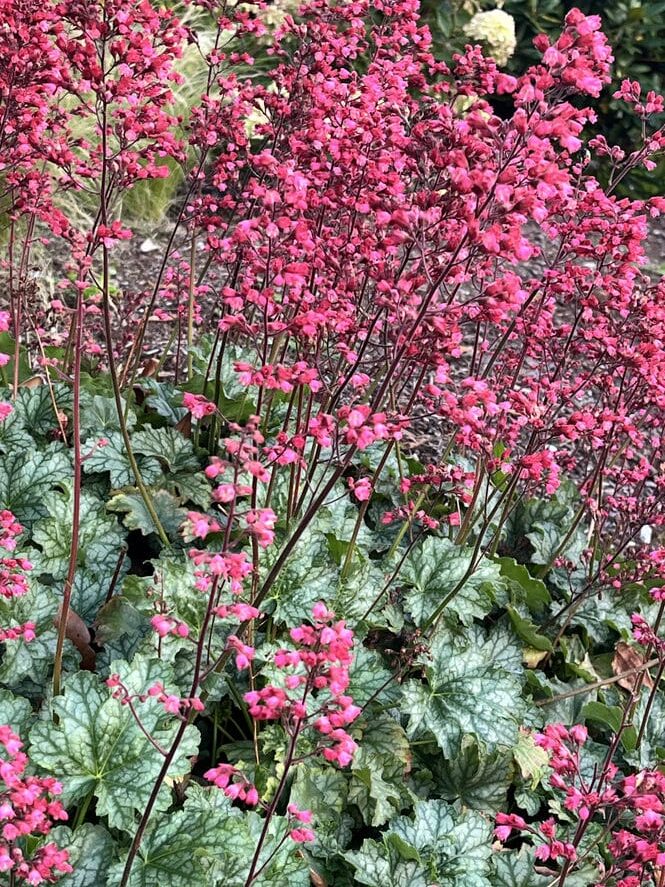
A favourite among garden plants for shade, heuchera thrives in partial shade and works particularly well in borders or containers. Its compact form makes it ideal for layering beneath larger plants, helping to fill gaps while adding a refined, decorative touch.
Easy to maintain and visually impactful, heuchera is perfect for introducing subtle colour variation and enhancing the overall texture of a shaded garden.

Affiliate Pick
Heuchera ‘Wild Rose’
Looking for shade loving plants that bring colour as well as texture? Heuchera ‘Wild Rose’ is a beautiful choice for shaded borders and containers, with richly toned foliage that lifts darker corners and adds depth to layered planting schemes.
- Ideal for shaded borders and pots
- Colourful foliage with strong visual impact
- Great for layering beneath taller plants
- Easy, low-maintenance planting
Cultivating Shade Gardens
Creating a thriving shade garden in the UK involves choosing the right plants and understanding that less light doesn’t mean less beauty. By selecting plants adapted to lower light conditions, you can enjoy a lush, vibrant garden that feels both enchanting and ethereal. Regular mulching helps to retain moisture and suppress weeds, enhancing the health and appearance of your shady retreat.
Embrace the cooler, quieter parts of your garden with these shade-loving plants, and turn what might once have been a gloomy corner into a place of tranquil beauty and interest all year round.
🌿 Further Reading: Designing with Shade Loving Plants
Creating a beautiful shaded garden goes beyond choosing the right plants. Explore these guides for ideas on layout, structure and planting combinations using shade loving plants.
🌱 More Garden Ideas
Discover inspiring layouts, textures and materials to transform low-light areas into inviting outdoor spaces.
Explore garden ideas →🌿 Screening Plants for Privacy
From evergreen shrubs to climbers, find the best screening plants to create privacy in shaded gardens.
View screening plants →🌳 Garden Shade Ideas
Use pergolas, layered planting and dappled light to bring structure and atmosphere to shaded areas.
Read garden shade ideas →🍃 Japanese Garden Plants
Create a calm, balanced space with carefully chosen foliage, texture and shade loving plants.
Discover Japanese plants →There is sponsored content on this page
Incorporating plants that thrive in shaded areas can transform dim corners of your garden into lush, vibrant spaces. Here are some frequently asked questions to guide you in selecting and caring for shade-loving plants in UK gardens.
Frequently Asked Questions
1. What types of shade exist, and how do they affect plant selection?
Understanding the type of shade in your garden is crucial for plant selection:
- Light Shade: Areas that receive indirect sunlight for most of the day.
- Partial Shade: Spots that get direct sun for part of the day, typically 3-6 hours.
- Dappled Shade: Filtered sunlight passing through tree canopies, creating a pattern of light and shadow.
- Deep Shade: Locations with little to no direct sunlight, often found under dense tree cover or between buildings.
Each type of shade supports different plant species, so identifying your gardens shade type is essential.
2. Which plants are best suited for deep shade in UK gardens?
For areas with minimal sunlight, consider the following plants:
- Ferns: Species like the harts tongue fern (Asplenium scolopendrium) and lady fern (Athyrium filix-femina) thrive in deep shade and add rich texture to the garden.
- Hellebores: Also known as the Christmas or Lenten rose, hellebores bloom in late winter to early spring, offering colours ranging from white to deep purple.
- Japanese Anemones: These perennials bloom from late summer into autumn, providing tall, graceful flowers in shades of white, pink, and purple.
3. How can I improve soil conditions in shaded areas?
Shaded areas often have dry or compacted soil due to tree roots and lack of sunlight. To enhance soil quality:
- Add Organic Matter: Incorporate compost or well-rotted manure to improve soil structure and moisture retention.
- Mulching: Apply a layer of mulch to conserve moisture and regulate soil temperature.
- Aeration: Gently loosen the soil to promote air and water movement.
These practices create a more hospitable environment for shade-loving plants.
4. Can I grow flowering plants in shaded areas?
Yes, several flowering plants thrive in shade, adding colour and interest:
- Foxgloves (Digitalis purpurea): These tall biennials produce tubular flowers and are well-suited for dappled or partial shade.
- Bleeding Heart (Lamprocapnos spectabilis): Known for its heart-shaped pink and white flowers, it flourishes in light, damp shade.
- Astilbe: With feathery plumes in colours like pink, red, and white, astilbes brighten up shady borders, especially in moist soils.
5. How do I manage pests on shade-loving plants?
Shaded gardens can attract specific pests:
- Slugs and Snails: Particularly fond of hostas and other leafy plants.
Control Methods:
- Natural Predators: Encourage hedgehogs and birds that feed on these pests.
- Barriers: Use copper tape or crushed eggshells around plants to deter slugs and snails.
- Traps: Set up beer traps to lure and drown them.
Regular monitoring and maintaining garden hygiene can also help keep pest populations under control.
By selecting appropriate plants and implementing proper soil and pest management strategies, you can create a thriving shade garden that enhances the beauty of your outdoor space.