
A gorgeous garden doesn’t have to mean constant mowing, watering and weeding. These low maintenance garden ideas are all about smart structure and resilient planting — so your outdoor space looks pulled together, even when life is busy. Whether you’re planning a low maintenance small garden design, refreshing a low maintenance front garden, or simplifying a larger plot, the goal is the same: choose materials and plants that do the hard work for you.
You’ll find practical design moves, easy plant choices, and low-effort layout tips below — plus a few calm, modern styles (including gravel and Zen-inspired options) that suit UK gardens beautifully. From gravel borders to simple stepping-stone paths, these ideas help you create a low maintenance garden that stays tidy year-round.

Gravel mulch is one of the easiest ways to cut down weeding and keep borders looking tidy. Pair it with hardy, drought-tolerant plants such as lavender, salvias and ornamental grasses, then add one or two evergreen shapes for year-round structure — a simple route to a low maintenance garden that still feels full of life.
What makes a garden “low maintenance”?
A low maintenance garden isn’t bare — it’s simply designed to reduce repetitive jobs. Most easy-care gardens share a few key features:
- Less lawn, more structure. Mowing and edging are often the biggest time-drain. Even shrinking your grass area makes a big difference.
- Clear shapes and crisp borders. Straight lines and defined edges stop paths and beds from looking messy.
- Repeat a small plant palette. Repetition looks designer-led and avoids constant replanting.
- Mulch matters. Gravel mulch or organic mulch suppresses weeds and helps soil hold moisture.
- Plants chosen for stamina. Hardy perennials, grasses and evergreen shrubs cope well with UK weather and need less attention.

For low maintenance garden designs, it’s hard to beat a gravel base paired with oversized planters. The look feels intentional, keeps edges tidy, and cuts down on the repetitive jobs that creep into mixed borders. If you’re thinking about how to create a low maintenance garden (or even a low maintenance small garden design), choose two or three strong elements like this and repeat them for a calm, designer-led finish.
How to create a low maintenance garden
If you’re wondering how to create a low maintenance garden, start with one decision: what do you actually want to maintain?
Pick one “high-effort” feature you genuinely enjoy (maybe a small lawn patch, a few pots of seasonal colour, or a veg bed). Then make everything else easy-care.
A simple plan that works for most gardens:
- Map sun and shade first. This avoids buying plants that never thrive.
- Reduce the lawn (or keep it to one simple shape).
- Choose one main surface for the hard landscaping (gravel, paving, decking) and repeat it.
- Add clear edging so gravel, mulch and plants stay contained.

For a crisp finish, corten steel edging is a low maintenance favourite — it keeps gravel in place and makes mowing much easier.
5. Use mulch generously to cut down weeding.
6. Plant in groups and repeat the same varieties for a calm, intentional look.

Grouping plants in generous clumps is one of the simplest ways to make a low maintenance garden design look deliberately designed. Repeating the same few varieties (rather than lots of one-offs) gives you a calm, modern look — and it’s easier to water, weed and cut back. It’s a go-to move for low maintenance modern garden ideas, especially when you want a tidy finish with minimal effort.
Low maintenance small garden design
A low maintenance small garden design is often easier than a larger space because every element can be intentional. Think of it like an outdoor room: one main seating spot, a simple path, and planting that feels contained rather than sprawling.

Gravel and paving create a tidy base that’s easy to sweep, while raised beds keep planting contained and reduce weeding around edges. This kind of courtyard garden style layout is ideal for low maintenance small garden design — you get greenery and colour, but the structure stays neat with minimal effort.
Two low-effort upgrades that make a big impact:
- Go bigger with fewer pots. Large planters dry out more slowly and look more considered than lots of small ones.
- Choose architectural plants. Grasses, evergreens and a few long-flowering perennials add movement without constant deadheading.
Gravel is especially useful in compact gardens because it keeps everything neat. If you’ve got another section on gravel gardens, add an internal link here to your gravel garden ideas article (and if you mention containers, link to your gravel garden ideas with pots post).
Low maintenance front garden ideas
For kerb appeal without the upkeep, low maintenance front garden ideas tend to work best when you keep the layout simple and practical.

For a front garden that stays neat with minimal effort, keep the planting simple and let the shape do the work. A curved gravel bed with one or two evergreen shrubs looks smart all year, and a small stone feature adds a focal point without adding chores. Finish with sturdy edging and a weed-suppressing membrane to keep everything crisp. Finish with sturdy edging and a weed-suppressing membrane to keep everything crisp — it’s one of the easiest ways to create low maintenance garden designs that still feel considered.
Try these easy wins:
- Swap fiddly borders for gravel with strong edges. It looks smart year-round and doesn’t require mowing.
- Limit planting to a few hardy choices. Evergreens, lavender, ornamental grasses, hebes and hardy shrubs are reliable and tidy.
- Add one focal point. A statement pot, a small tree, or a sculptural boulder gives the garden a “designed” feel.
- Keep access clear. A straightforward path is easier to sweep and less likely to become messy.
- Hide the practical bits. If bins are visible from the street, a simple screen or shelter instantly upgrades the view — see our bin store ideas for neat, low-effort solutions that suit small front gardens.
Low maintenance gravel garden ideas
Gravel gardens are one of the easiest ways to create a tidy, stylish outdoor space with less ongoing effort. They suit UK gardens brilliantly — especially when you combine gravel with drought-tolerant plants and strong edging.
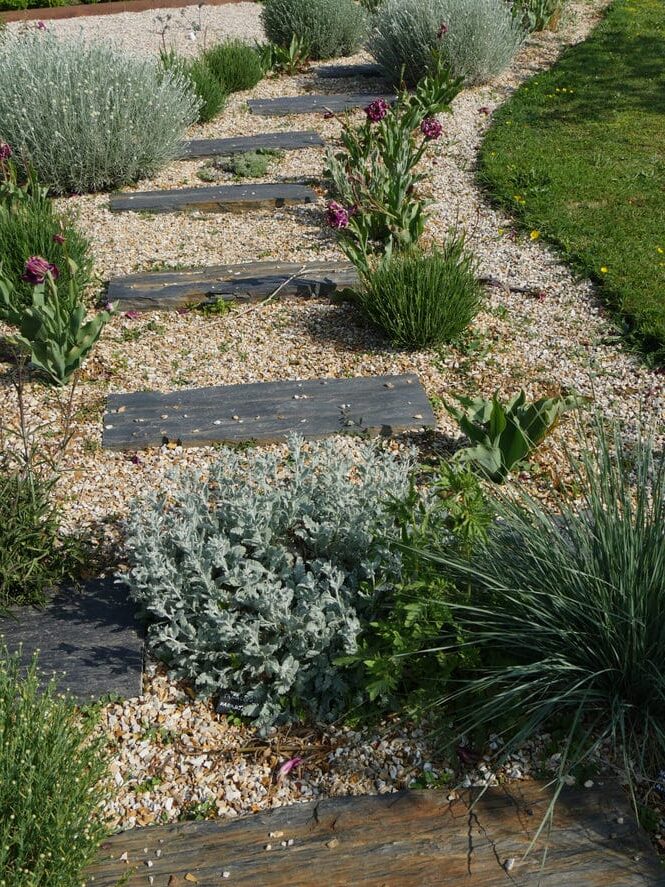
Timber sleepers (or stepping boards) create an easy, non-slip route through gravel and planting, while the gravel mulch helps suppress weeds and keeps soil moisture in. Pair this look with hardy, drought-tolerant plants such as grasses, lavender and silvery foliage for a low maintenance garden that still feels lush and designed.
To make gravel work (and stay low maintenance):
- Use a proper base and edging. This keeps gravel from travelling and reduces weed problems long-term.
- Choose plants that thrive in free-draining conditions. Think lavender, thyme, santolina, rosemary, euphorbia, sedums, salvias and ornamental grasses.
- Include a few larger stones or boulders. They make the garden look intentional and “finished.”
- Repeat plants in drifts. It looks calmer and is easier to maintain than lots of one-offs.

A small water feature is one of the quickest ways to elevate low maintenance garden designs. This stone-effect piece adds gentle movement and soft sound to a gravel border, and its aged finish pairs beautifully with evergreens and Mediterranean-style planting.
Want an easy focal point? Shop the Remi Ancient Stone Water Feature.
Low maintenance small rock garden ideas
If you like the look of natural stone, low maintenance small rock garden ideas are a brilliant option — especially on sunny sites. Rocks create structure, help reduce evaporation around plants, and instantly make a space feel styled.

For low maintenance modern garden ideas, it’s hard to beat a rock garden: big stones create an architectural focal point, while gravel mulch keeps weeds down and defines the shape. Keep planting simple with a tight palette of drought-tough evergreens (dwarf pines, compact shrubs) repeated in clumps for a designer-led finish. This approach also works brilliantly as a low maintenance small garden design, and you can soften the look with one small water feature nearby if you want a calmer, more “finished” feel.
For a low-effort rock garden:
- Use stones to create small terraces or edges.
- Plant around rocks with tough, sun-loving plants (thyme, sedums, hardy geraniums, campanula, dwarf grasses).
- Keep the palette limited and repeat varieties for a cohesive look.
- Avoid high-water, high-maintenance plants that fight the dry, free-draining style.
Low maintenance modern garden ideas
Modern gardens often look “expensive” because they rely on structure and restraint — which also makes them wonderfully low maintenance.
For low maintenance modern garden ideas, lean into:
- Large-format paving or clean gravel sections
- Simple planting shapes (blocks of grasses, clipped shrubs, repeated perennials)
- Evergreen structure (box substitutes, yew, pittosporum, hebes)
- A limited colour palette (greens, silvers, whites, with one accent colour)
Rather than lots of decorative “bits” that need rearranging, finish with one strong focal point — a firepit bowl, a modern bench, a sculptural planter… or a simple water feature.

This is the modern low maintenance formula in one glance: clean gravel, oversized paving, and just a few architectural plants to soften the edges. Keeping the palette tight makes everything feel intentional — and it cuts down on weeding because planting is concentrated in small pockets. If you love this look, it pairs beautifully with our gravel garden ideas for more ways to use stone as a practical design feature.
Finish with lighting or one statement piece (a firepit bowl, a modern bench, or a sculptural planter) rather than lots of decorative “bits” that require rearranging.

One well-chosen focal point can make a low maintenance garden feel finished. A shallow bowl or bird-bath style water feature gives you that “designed” look, but it’s still easy to live with — especially when it’s set into paving with gravel edging to keep everything crisp.
Prefer something a touch more naturalistic? A shallow rill edged with pebbles and a few statement boulders gives the same calming effect, without committing to a full pond.

Water doesn’t have to mean high maintenance. Keeping the planting simple and using gravel and large stones as the “structure” gives you a tranquil feature that still feels crisp and easy to live with.
Serene and simple: a Zen-style low maintenance garden
A Zen-inspired garden can be one of the easiest styles to live with because it’s designed around calm structure rather than constant planting. Gravel becomes the “negative space”, rocks become focal points, and greenery is minimal and intentional.

Planting choices that keep maintenance low
The best low-maintenance plants are those that look good even when you don’t fuss over them.
Reliable options for many UK gardens include:
- Ornamental grasses (structure, movement, minimal fuss)
- Lavender and salvias (long flowering season, pollinator-friendly)
- Evergreen shrubs (year-round shape and colour)
- Hardy geraniums (excellent groundcover that helps suppress weeds)
- Sedums (great for dry areas and gravel gardens)
A quick rule: if a plant needs frequent feeding, staking, deadheading, or winter protection, it’s probably not your best “low-maintenance” choice.
Quick checklist: how to make a garden low maintenance
If you’re thinking “how to make my garden low maintenance”, use this checklist:
- Reduce lawn area (or keep it small and simple)
- Choose one main hard surface (gravel or paving) and repeat it
- Add crisp edging
- Mulch planting beds (or use gravel mulch)
- Plant in repeat groups rather than lots of different varieties
- Prioritise hardy plants that suit your light levels
- Keep a small “high-effort” zone if you enjoy gardening — and make everything else easy
Recommended reading

Garden Ideas Hub
Browse all garden inspiration in one place — easy-care layouts, planting ideas and outdoor styling.

Gravel Gardens with Pots
A simple, stylish way to cut weeding and create structure — perfect for small gardens and patios.

Fire Pit Garden Designs
Turn your outdoor space into a warm, sociable haven with clever seating, lighting and layout ideas.
FAQs
What is the lowest maintenance garden?
A simple, shrub-and-hardscaping garden is usually the lowest maintenance: think gravel or paving, a few tough evergreen shrubs, and ground cover plants to suppress weeds. Keep shapes bold (fewer fiddly borders), minimise lawn (or skip it), and use a thick mulch (bark/gravel) so you’re not constantly weeding. For truly hands-off results, add drip irrigation on a timer and choose plants that suit your light/soil so they don’t need pampering.
How can I make my garden look good with no money in the UK?
- Tidy first: edge paths/borders, sweep patios, and remove dead growth — it instantly looks “designed”.
- Re-use what you have: group pots together, turn spare bricks into edging, and use jars/tins as mini planters (with drainage holes).
- Take free plants: ask neighbours for cuttings/divisions, join local swap groups, and check Freecycle/Facebook Marketplace for pots, sleepers, and paving.
- Make free mulch: use grass clippings (thin layers), shredded leaves (leaf mould), or ask a local tree surgeon for woodchip.
- Create one focal point: a painted chair, a lantern, a mirror, or a simple “feature” pot makes everything feel intentional.
What’s the best thing to plant in September?
In the UK, September is brilliant for planting because the soil is still warm and rain is usually more reliable. Best bets:
- Perennials and shrubs (they establish roots before winter)
- Trees and hedging (especially once it cools a little later in the month)
- Spring bulbs like daffodils, crocus and alliums (tulips are often best planted later in autumn)
- Hardy salad/veg such as spinach, winter lettuces and spring onions for an autumn/winter pick
What is the 70/30 planting rule?
The 70/30 planting rule is a simple way to keep a garden looking good year-round with less effort:
- 70% “backbone” plants for structure (evergreens, shrubs, grasses, reliable ground cover)
- 30% “seasonal stars” for colour and interest (perennials, bulbs, annuals, statement containers)
It stops borders becoming high-maintenance, because most of the garden is made up of plants that hold their shape and don’t need constant replacement.