
Small living room ideas aren’t about squeezing more in — they’re about making a compact space feel calmer, brighter and beautifully liveable. Whether you’re styling a narrow UK lounge, a tiny snug, or a living room that needs to double as dining and working space, a few clever tweaks can make the whole room feel more generous.
Inside, you’ll find small living room layout ideas, very small living room ideas for tight footprints, plus small living room furniture tips that help you buy once (and buy well). Then we’ll finish with the fun bit: colour and mood, including Farrow & Ball-inspired looks that create atmosphere without making the space feel boxed in.

When you’re collecting small living room ideas, look for “layout helpers” first, then a single colour lift. A dark beige sofa living room feels calm and generous when the wood panel TV wall stays the focal point and everything else supports the flow. That’s where a tall slim bookcase shines: loads of vertical storage, barely any footprint. Next, a swivel chair adds flexible seating you can angle to the screen or swing back into the chat. Ground it all with a beige rug in the living room, and let mustard colour do the heavy lifting for personality — one accent, maximum impact.

Tall slim bookcase
Shop
Swivel chair
Shop
Curved coffee table
Shop
Mustard botanical cushion
Shop
Yellow dining chair
ShopReady for the fast fixes? Here are the small living room ideas that make the biggest difference.
Small living room ideas: quick wins that instantly make a room feel bigger
Airy doesn’t always mean pale. Spacious doesn’t always mean minimal. The secret is visual calm — the eye needs a few clear resting places.
1) Float the furniture (even slightly)
Pull the sofa forward by 5–10 cm so it’s not glued to the wall. That tiny shadow gap can make the whole layout feel more intentional.
2) Keep the floor “legible”
Choose pieces with visible legs (sofa, armchair, side tables). When you can see floor underneath, the room reads larger.
3) Go bigger with your rug, not smaller
A rug that’s too tiny makes everything look cramped. Aim for a rug that at least reaches the front legs of the sofa and chairs.
4) Choose one hero piece, then quiet the rest
In a small lounge, competing patterns and finishes can feel busy fast. Make one thing sing (a sofa, a wall colour, a statement artwork), then keep supporting players softer.
When one element does the talking, the whole room relaxes. Card Room Green by Farrow & Ball turns the TV wall into a muted green feature wall with a gentle focal point — so the sofa, rug and accessories don’t need to compete to make the space feel finished.
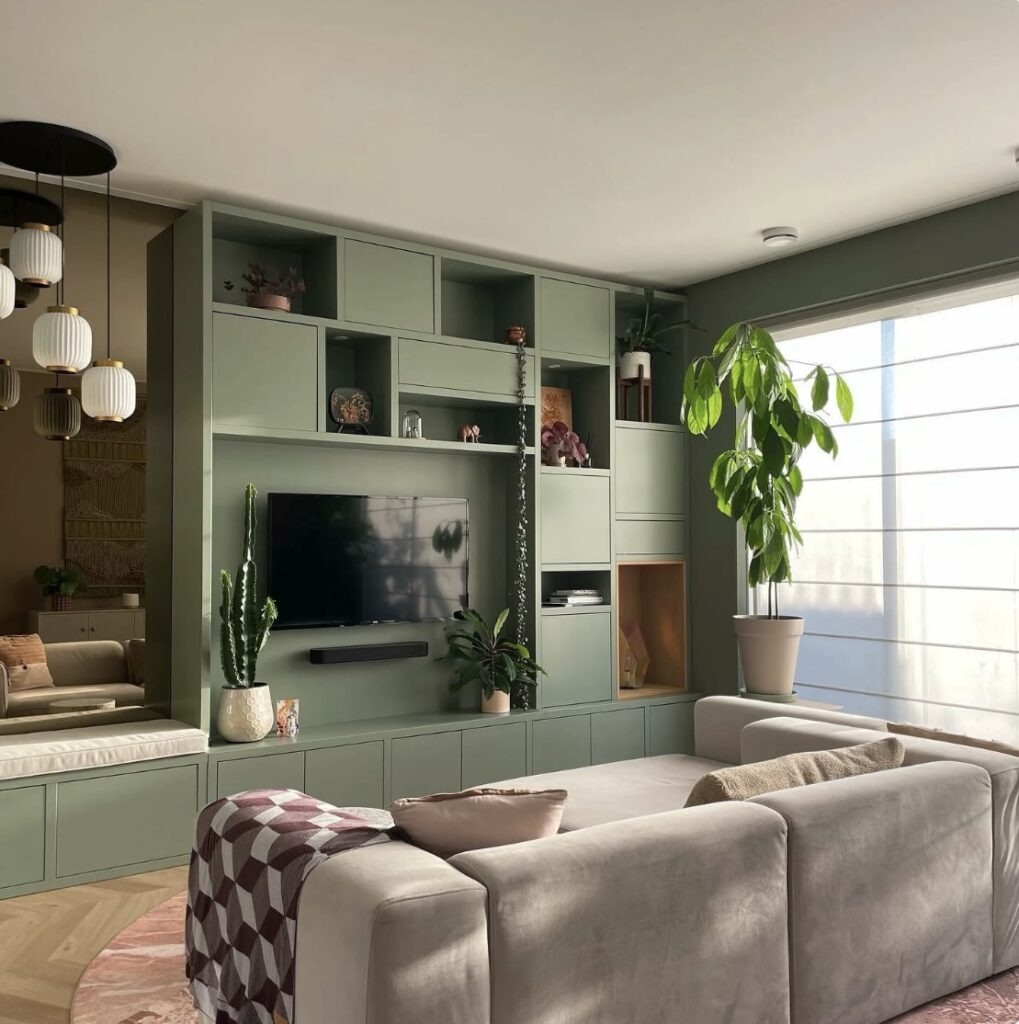
The bonus of making your hero moment work harder? You can push storage upwards rather than outwards — which is exactly what small spaces need.
5) Use walls properly: plug-in sconces, shelves, hooks
Wall-mounted lighting frees up side tables. Slim shelves above a sofa add storage without eating the footprint.
Once the TV wall has a clear “job”, the smartest small-space upgrade is to push storage upwards — not outwards. Think plug-in sconces instead of table lamps, slim ledges in place of chunky side units, and shelves that wrap awkward spots (doors, alcoves, corners) so the floor stays open and the room still breathes.
A favourite trick is using the wall around a doorway as storage — it’s basically wasted real estate otherwise. Bonus points if the shelves frame a view through to the next zone: here, that glimpse of a pink kitchen keeps the whole space feeling layered and lived-in, rather than crammed.

6) Let the light travel
Mirrors opposite (or adjacent to) windows bounce daylight around. Glass, marble, and pale woods help too — even in darker schemes.
7) Hide the “small stuff”
Remotes, chargers, coasters, half-read magazines — these are the true clutter culprits. Add a lidded basket, storage ottoman, or a tray that corrals the chaos.
Very small living room ideas (when you barely have floor space)
When the room is truly tiny, every centimetre needs a job — and ideally, more than one.
1) Swap bulky arms for a slimmer silhouette
An armless accent chair or a narrow-armed sofa can be the difference between “tight squeeze” and “easy flow”.
2) Try nesting tables instead of a chunky coffee table
Nesting tables tuck away neatly and can be pulled out when guests arrive.
3) Wall-mount the TV (and keep the unit shallow)
A wall-mounted TV with a shallow unit (or built-in-style storage) keeps the room feeling open, calm and properly pulled together.

If your TV is the focal point, the goal is to keep everything around it clean and low-profile so the room still feels calm. A long, streamlined media wall (or built-in-style cabinetry) reduces visual clutter, while a simple sofa placed directly opposite creates an easy viewing angle without awkward furniture shuffling. The best part? When the storage is doing the heavy lifting, the rest of the room can stay beautifully minimal.
Steal the idea
- Place the sofa directly opposite the TV and keep a clear walkway down one side.
- Choose a low media unit or built-in wall so the room feels wider and less busy.
- Use a large rug to anchor the seating zone and soften hard surfaces.
4) Choose a storage ottoman as your coffee table
Soft edges are friendlier in small spaces — and hidden storage is worth its weight in gold.
Shop the look: Storage ottoman coffee table
A soft, upholstered storage ottoman works as a coffee table — with hidden space for throws, games and clutter.


Wavy Stripe Storage Ottoman Footstool
*Affiliate links: if you buy through these links, Artisan Haus may earn a small commission at no extra cost to you.
5) Consider a swivel chair
One chair that turns towards the TV and the conversation area can reduce the need for extra seating.
Consider a return swivel chair
A return swivel chair turns towards the TV, then gently swings back towards the conversation area — so you get flexible seating without adding a second armchair.
Normann Copenhagen Burra Return Swivel Lounge Chair
*Affiliate links: if you buy through these links, Artisan Haus may earn a small commission at no extra cost to you.
6) Use a console behind the sofa
If your sofa floats, a narrow console behind it becomes a landing strip for lamps, books and drinks — without needing side tables.
Shop the look: Console behind the sofa
A slim console behind a floating sofa adds a surface for lamps, books and a drink — without cluttering the floor.

Bespoke Behind Sofa Console Table (recessed plug)
*Affiliate links: if you buy through these links, Artisan Haus may earn a small commission at no extra cost to you.
7) Go vertical with a tall cabinet or bookcase
Wide furniture steals floor space. Height gives you storage without spreading out.
Small living room furniture: what to buy (and what to avoid)
Buying for a compact lounge is really about proportion. The right pieces look curated; the wrong pieces look like you’re constantly “making do”.
The best buys for small living rooms
- Slimline sofa: Look for shallow depth and higher legs if possible.
- Round coffee table: Softer circulation, fewer bruised knees.
- Nesting tables: Flexible surfaces on demand.
- Storage ottoman: Coffee table + hidden storage in one.
- Armless/low-profile chair: Adds seating without visual heaviness.
- Wall lights: Clears surfaces, creates a layered glow.
- Tall closed storage: Keeps clutter out of sight.
What tends to make small rooms feel smaller
- Overstuffed sofas with chunky arms
- Lots of little occasional tables (visual noise)
- Furniture pushed hard against every wall
- Open shelving everywhere (it looks cluttered quickly)
- Tiny rugs and tiny art (both can make the room feel mean)
A simple rule that helps: pick fewer items, but choose the ones you keep to be properly sized — not mini.
Small living room layout ideas (6 common UK layouts)
Layout is where most small living rooms either succeed… or feel permanently awkward. Here are the scenarios that come up again and again in UK homes.
Layout 1: Long and narrow lounge
Aim: create a clear walkway and stop the room feeling like a corridor.
- Keep the sofa on the longer wall
- Use one statement chair rather than two small chairs
- Add a round table (coffee or side) to soften the geometry
- Consider a gallery wall or one large artwork to anchor the far end
Layout 2: Fireplace as the focal point
Aim: make the fireplace feel intentional without sacrificing seating.
- Angle one chair slightly towards the hearth
- Use a compact loveseat instead of a full sofa if needed
- Place a mirror or artwork above the mantel to lift the eye

A fireplace does the hard work in a small living room — it naturally creates a centre point, which makes arranging furniture far easier. The trick is to keep seating pulled into a cosy conversation zone: a sofa opposite, one accent chair angled in, and a rug that anchors everything so it feels intentional rather than “floating”.
Layout 3: TV-first living room
Aim: keep tech tidy and the room cosy.
- Wall-mount the TV
- Choose a shallow media unit (or floating unit)
- Use a swivel chair so seating serves both TV and conversation
A deep burgundy paint instantly anchors a TV wall, especially when the cabinetry is built in.

Farrow & Ball Brinjal is a confident burgundy wall paint choice for a tv wall — it adds depth and makes the screen feel intentionally “framed”, rather than floating. Built-in cabinetry keeps everything streamlined, giving you display space and closed storage without stealing precious floor area. That richness also sets up a lovely contrast with the lighter bay window lounge beyond, so your eye naturally travels towards the window and the room feels layered rather than crowded.
With the TV zone handled, the bay can become a lighter, softer moment — a reading nook rather than dead space.
Layout 4: Bay window lounge
Aim: stop the bay swallowing the room.
- Turn it into a reading nook (chair + small table + lamp)
- Or add a bench with storage to make it earn its keep
- Keep curtains light and floaty (or try a Roman blind)
Layout 5: Open-plan living + kitchen: zone it properly
Aim: create zones that feel separate, but still flow beautifully together.
- Anchor the living area with a rug (it instantly defines the lounge zone)
- Use a slatted divider or open shelving to separate zones without blocking light
- Repeat one finish — wood, black or brass — across both zones so everything feels calm and cohesive

Love this open-plan layout? Here’s the same zoning idea translated into a simple, modern look you can recreate — a slatted divider, a warm jute rug, and a sofa along the long wall to keep circulation clear.
An open-plan space feels instantly calmer when each zone has a clear focal point — and this look is a perfect example. A beige sofa living room scheme keeps the base soft and breathable, while carefully chosen orange living room accessories add warmth and personality without overwhelming the room. The result is relaxed, welcoming, and quietly confident.
A patterned beige living room rug does more than look pretty underfoot. It defines the lounging area, visually “pulling” the sofa into its own zone so the room feels intentional rather than improvised. Choose a rug with subtle tonal variation (and a slightly imperfect, artisanal feel) to bring depth to neutrals — it’s the easiest way to stop beige from feeling flat.
To separate dining from living without blocking light, creative room dividers are the secret weapon. A slatted oak screen keeps sightlines open, lets daylight travel, and adds an architectural moment that instantly elevates a small room. It’s zoning without heaviness — perfect for compact UK homes where every centimetre needs to feel free.
Finish the look with a few well-placed accents: a terracotta vase, warm-toned cushions, and a touch of woven texture. Keeping the palette tight (beige, oak, orange, and a small hit of blue-green) makes the space feel pulled together — cosy, modern, and easy to live in.


Layout 6: Awkward doorways and walk-throughs
Aim: protect circulation.
- Keep pathways clear (especially between doors)
- Choose slimmer furniture and fewer pieces
- Use wall lights and shelves instead of floor lamps and side units
Tiny layout upgrade that works almost everywhere: don’t line everything up like soldiers. Angle one piece slightly — an accent chair, a pouffe, even the coffee table — so the pathway feels natural as you move through the room. Straight lines can feel rigid; a gentle turn makes a walk-through space feel softer, calmer, and more lived-in.

Small living room storage ideas that don’t look like storage
The dream is a lounge that feels relaxed, not “stuffed”. Storage helps — but it needs to be discreet.
1) Closed storage is your best friend
A single closed cabinet can hide a surprising amount and keeps the room feeling calm.
2) Create a “drop zone” near the door
A small basket, hooks, a narrow shelf — somewhere for keys, dog lead, post, chargers.
3) Use baskets like décor
Choose woven, lidded baskets in a size that looks intentional. They soften the room and hide clutter.
4) One wall can do more than you think
A full-height bookcase or cabinet gives you storage without peppering the room with lots of small pieces.
5) Think behind doors
Slim hooks or hanging organisers can store throws, cables, even board games.
Small living room décor: how to layer without clutter
A small space can still feel rich and characterful — it just needs editing.
1) Work in threes
Three cushions, three colours, three textures. It feels styled, not chaotic.
2) Repeat one tone throughout
Pick a grounding colour (warm white, oat, charcoal, deep green) and echo it in the rug, art, or accessories.
3) Choose one pattern scale
If your rug is bold, keep cushions quieter. If the cushions are patterned, go plainer on the sofa.
4) Add softness at eye level
Curtains, artwork, a mirror, a wall lamp — this is what makes a room feel finished.
5) Don’t forget scent and sound
In small rooms, atmosphere is everything. A softly glowing lamp, a candle, a linen spray, and a gentle playlist can change the feel instantly.
Small living room design rules designers swear by
A few guiding principles will make decision-making easier (and stop impulse buys).
1) Create a focal point
Fireplace, artwork, TV wall, colour drench — choose one. The rest supports it.
2) Keep the palette tighter than you think
Two to three main colours is usually enough. Texture adds depth without visual noise.
3) Prioritise lighting layers
Overhead + table or wall + a soft accent (candles or LED). One ceiling light alone can make a room feel flat.
4) Make negative space on purpose
Leave a little breathing room somewhere — a clear corner, an open shelf, a bare stretch of wall. It lets the room feel composed.
5) Measure before you fall in love
Tape the sofa footprint on the floor. Check door swing. Confirm the rug size. Tiny rooms punish guesswork.
Colour ideas for a small living room (Farrow & Ball-inspired looks)
Deep Blue Elegance with Hague Blue

Painted in Farrow & Ball Hague Blue, this small living room feels both dramatic and comforting. Deep tones like this can make a room feel cocooning rather than cramped, especially when paired with plush textures. The L-shaped sofa maximises seating without crowding the floor, while the oversized ottoman doubles as a coffee table and storage surface. This is a prime example of how multifunctional furniture can enhance cosy small living room décor.
Modern Glamour with Railings

Dark walls don’t have to overwhelm a small space. In this scheme, Farrow & Ball Railings provides a striking backdrop for a velvet sofa in blush pink. The combination of deep, moody paint with soft, playful furnishings balances sophistication with warmth. Slim furniture and metallic accents introduce elegance without taking up much room, showing how to decorate a small living room with flair.
Stripes and Structure in Down Pipe

Here, Farrow & Ball Down Pipe meets Closet Stripe wallpaper for a bold, graphic finish. Vertical stripes visually lengthen the walls, a clever trick for enhancing the proportions of a smaller space. The glass coffee table ensures the room doesn’t feel cluttered, while the patterned rug anchors the seating area. Striking yet efficient, this design showcases how small living room ideas can incorporate strong style statements without crowding the space.
Cosy Contrast with Down Pipe

Another take on Down Pipe, this living room combines deep joinery with the natural warmth of a wooden door. Floor-to-ceiling shelving frames the space and creates plenty of storage, ideal for compact homes where every inch counts. A pale armchair adds balance, while accessories layered in neutral tones soften the overall effect. This scheme demonstrates how to use darker colours in a small house open concept living room without it feeling enclosed.
A small living room doesn’t have to feel restrictive — it just needs a little strategy. Start by deciding what the room is for (TV nights, reading, hosting, working), then build the layout around that focal point so everything feels deliberate. Keep the floor as open as possible, choose pieces that earn their place (curved edges, hidden storage, slim proportions), and push storage upwards with shelves or tall units that don’t steal precious footprint. Finish with layered lighting and a few tactile textures — the touches that make a compact space feel calm, cosy, and properly lived-in.
Explore the Living Room Hub
Fancy a few more ideas before you start moving furniture? Dip into the hub for colour, layout and styling shortcuts — plus two reader favourites below.

Orange Cushions: Styling Tips and Colour Pairing Ideas
A simple cushion switch can warm up a neutral scheme fast — without changing anything big.
Read the article →
Styling a Black Console Table
Console tables are small-space heroes: a landing spot for lamps, books and the everyday bits you want contained.
Read the article →FAQs on Small Living Room Ideas
How can I make a small living room look nice?
Start by editing the “noise”: clear surfaces, hide cables, and corral small items into trays/baskets. Then make the layout feel deliberate — anchor seating with a properly sized rug, pull the sofa forward a few centimetres, and add one strong focal point (TV wall, fireplace, or artwork) so everything else can stay calm. Finally, layer lighting (overhead + lamp + wall light) and texture (throws, cushions, a tactile rug) for warmth without clutter.
What is the 3 4 5 rule in decoration?
You’ll see two versions used:
- Decorating version: mix 3 patterns, 4 styles/eras, and 5 colours or textures for a collected look.
- Layout version: a 3–4–5 triangle helps create a perfect right angle when setting out furniture or planning spacing.
For small rooms, use either rule lightly — the win is balance, not busyness.
Which colour is best for a small living room?
The “best” colour is the one that supports the mood and the light you actually get. If the room is dim, lean into lighter walls and bring depth through texture, artwork and soft contrast. If it’s bright, you can go deeper and richer — just keep the rest of the scheme simple so the room still feels breathable.
What is the 3-5-7 rule in decorating?
It’s a styling trick: group décor in odd numbers (often 3, 5, or 7) because it looks more natural and intentional than pairs.
Use it on shelves, a mantel, or a coffee table: a small stack of books + a vase + one sculptural object is often enough.
What not to do when decorating a small living room?
Avoid anything that “blocks the room”: oversized sofas, bulky coffee tables, tiny rugs, and heavy curtains that steal daylight. Don’t scatter lots of little accessories either — fewer, slightly larger pieces look calmer and more grown-up. Also, resist pushing everything hard against the walls; a little breathing space often makes the layout feel more considered.
How do I fit a dining table in a small living room?
Choose shapes that improve flow: a round table is the easiest for tight footprints, while an extendable option keeps flexibility. If space is really limited, try a wall-mounted drop-leaf or a slim console that doubles as a dining perch, paired with tuck-away chairs or a bench.
How do I decorate a small living room for Christmas?
Scale is everything: a slim tree (or even a tabletop tree), a simple garland, and warm fairy lights can feel festive without taking over. Concentrate sparkle in one or two places (mantel, shelves, window) and keep the rest edited — small rooms look best when there’s still space to breathe.
How do I separate a kitchen and living room in a small apartment?
Create “zones” rather than walls: use a rug to define the lounge area, a change in lighting (pendant over dining, lamps in living), and a visual divider like open shelving or a low console. Repeating one or two finishes across both zones (wood tone, black accents, brass) makes the transition feel calm and cohesive.