
A Japanese zen garden distils nature to its absolute essence. No flowers, no clutter, no colour for its own sake — just rock, gravel, moss, and the quiet geometry of raked sand. It is one of the most ancient garden forms in the world and, perhaps surprisingly, one of the most adaptable to the British garden.
The UK’s damp climate, grey light, and tendency towards moss and lichen are not obstacles to zen garden design — they are assets. A garden that might look austere in Kyoto develops a soft, weathered character in Hampshire or Yorkshire that feels entirely its own.

What is a Japanese Zen Garden?
Japanese zen gardens — known as karesansui, meaning dry landscape — originated in the temple gardens of Kyoto during the Muromachi period (1336–1573). Designed as an aid to Zen Buddhist meditation, they represent natural landscapes in abstract form. Raked gravel suggests the movement of water; rocks represent mountains or islands; moss evokes ancient forest floors.

The most famous example, Ryoanji in Kyoto, contains nothing but fifteen rocks arranged in raked white gravel. It has been drawing visitors for five hundred years.
In a domestic context, a zen garden doesn’t need to be that austere. The principles apply equally to a corner of a garden, a full backyard, or a compact urban plot — our small courtyard garden ideas guide shows how little space you actually need.
Zen Garden Design: The Seven Core Principles
Understanding the philosophy behind japanese zen garden design helps to make better decisions about every element. The seven core principles are:
Kanso — Simplicity. Remove anything that doesn’t serve a purpose. Every element earns its place or it doesn’t belong.
Fukinsei — Asymmetry. Balance achieved through deliberate imbalance. Odd numbers of rocks, uneven arrangements, compositions that feel natural rather than contrived.
Shizen — Naturalness. Nothing should look forced or artificial. Even carefully placed elements should appear as though they could have arrived there by themselves.
Yugen — Subtlety. Suggest rather than show. A partial view, a path that turns a corner, a rock half-buried in gravel — mystery is more powerful than full revelation.
Datsuzoku — Freedom from convention. Permission to break from what is expected. The most interesting zen gardens have an element of the unexpected.
Seijaku — Tranquillity. The overarching aim. Every decision should contribute to a sense of stillness.
Koko — Austerity. The beauty of age and weathering. Moss on a stone, lichen on a lantern, the patina of time — all are welcome rather than something to be cleaned away.
Three Types of Zen Garden
Karesansui — Dry Rock Garden
The classic form. Raked gravel or sand represents water, rocks represent land. No plants are required, though moss is often present. Suitable for any size space — even a large tray on a balcony can become a miniature karesansui. This is the classic zen sand garden in its purest form.
Tsukiyama — Hill Garden
A more naturalistic style incorporating shaped land, planting, and sometimes water. Less austere than the dry rock garden and more suitable for larger spaces where a full landscape can be suggested.
Tsubo-niwa — Courtyard Garden
Designed for small urban spaces — traditionally the narrow passages between buildings in Japanese cities. A single rock, a patch of gravel, and a moss-covered stone lantern can be enough. Perfect for a UK terraced house or city garden, and one of the best zen garden ideas for small spaces.
How to Create a Japanese Zen Garden in the UK
Start with the gravel
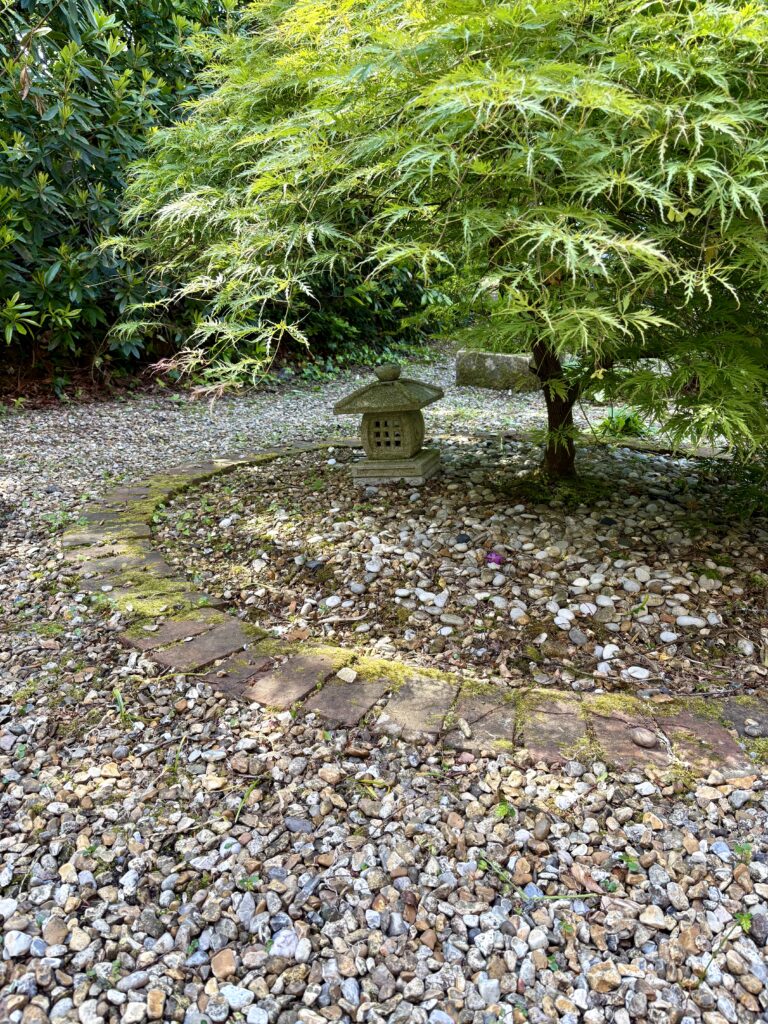
Gravel is the foundation of most zen gardens. In Japan, white or pale grey decomposed granite is traditional. In the UK, grey granite chips, cream limestone gravel, or white quartz all work well. Lay a weed-suppressing membrane first, then a depth of at least 5cm of gravel. For a zen sand garden or raked gravel design, finer material gives cleaner, more satisfying patterns.
For a broader look at gravel as a garden design element, our gravel garden ideas guide covers everything from laying techniques to planting through gravel.
Choose Your Rocks: The Zen Rock Garden
Rocks are the most important decision in a zen garden. Choose two or three significant pieces rather than many small ones — restraint is essential. In the UK, local stone is appropriate and weathers beautifully. Slate from Wales, granite from Scotland, and sandstone from Yorkshire all have the right character. Sink each rock at least a third of its depth into the ground for visual stability.
Incorporate moss
The UK climate is ideal for moss, which thrives in the damp and shade that would challenge many gardens. Moss softens the edges of rocks, fills gaps between stepping stones, and develops the aged quality that zen gardens seek. Leave it to establish naturally, or introduce live moss plugs to speed up the process.
Add a Zen Garden Water Feature
Water is an optional but powerful element. A tsukubai — a stone water basin — is the most traditional choice, used in tea garden settings for ritual hand washing. In a domestic garden it becomes a focal point and a source of sound. A simple recirculating pump keeps the water fresh. Alternatively, a bamboo spout dripping into a basin adds movement and the sound of water without the scale of a pond.
Consider a stone lantern
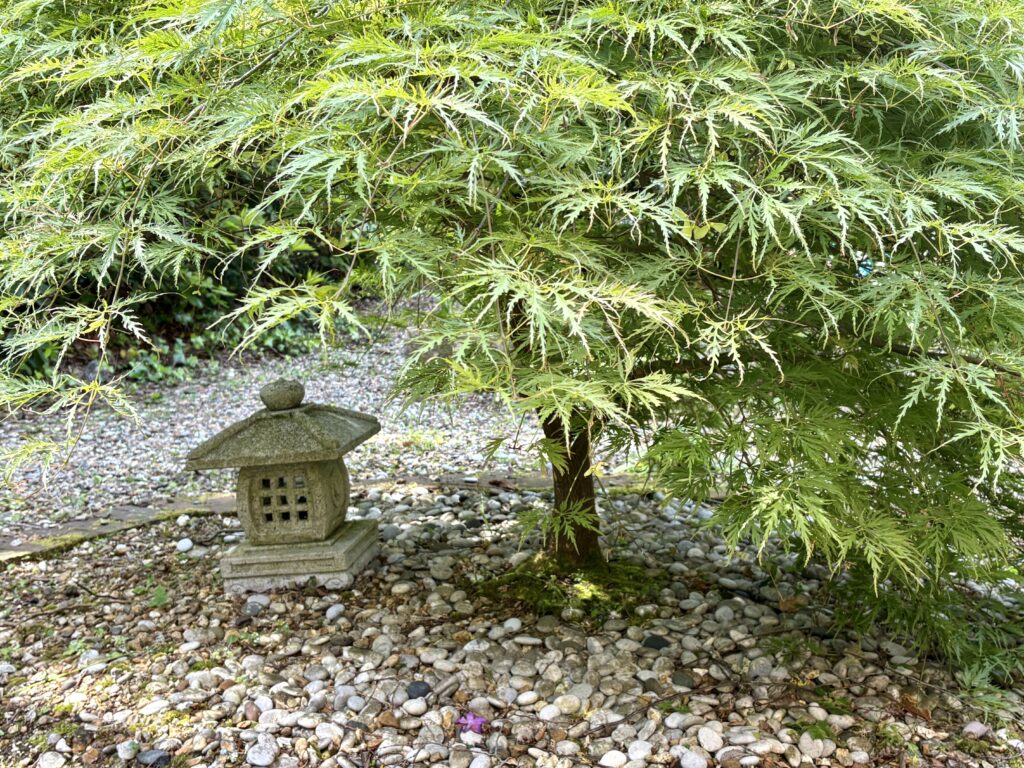
A granite lantern is the most recognisable ornamental element of a Japanese garden. Position it at a corner or beside a water feature rather than as a centrepiece. The best lanterns develop moss and lichen naturally over time, which is far preferable to a new, clean appearance. Stone lanterns are among the most characterful zen garden ornaments — and one of the few where age genuinely improves the appearance.
The Best Zen Garden Plants for UK Gardens
Planting in a zen garden should be sparse and carefully chosen. The goal is to suggest nature rather than replicate it in abundance.
Moss — the most important ground cover. Thrives in UK conditions and develops naturally on rocks and gravel edges.
Japanese Maple (Acer palmatum) — spectacular autumn colour, delicate foliage, naturally elegant branching structure. Choose a sheltered position away from strong winds. Acer palmatum ‘Bloodgood’ is one of the finest selections, with rich burgundy foliage turning crimson in autumn.
Bamboo — use clumping varieties rather than running ones in a domestic garden. Fargesia murielae (Umbrella Bamboo) and Fargesia nitida (Fountain Bamboo) are non-invasive, graceful, and fully hardy in the UK.
Pine — pines are central to traditional Japanese gardens, symbolising longevity. Pinus mugo (Mountain Pine) is the best choice for smaller gardens — compact, very hardy, and responsive to pruning into the niwaki cloud-pruned style.
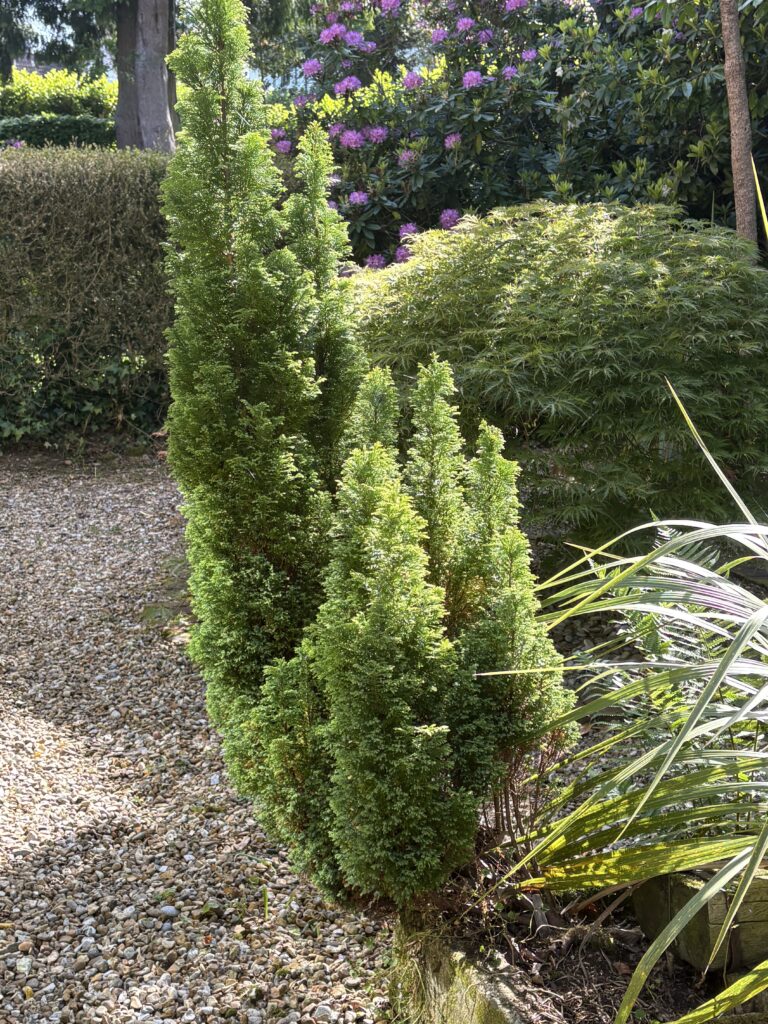
Yew (Taxus baccata ‘Fastigiata’) — the Irish yew’s tight columnar form has strong visual parallels with the clipped evergreens of traditional Japanese gardens. Extremely hardy, long-lived, and requires minimal maintenance once established.
Ferns — the UK’s damp climate suits ferns perfectly. Athyrium niponicum (Japanese Painted Fern) has striking silver and burgundy variegated fronds. Polystichum setiferum (Soft Shield Fern) is evergreen and extremely hardy.
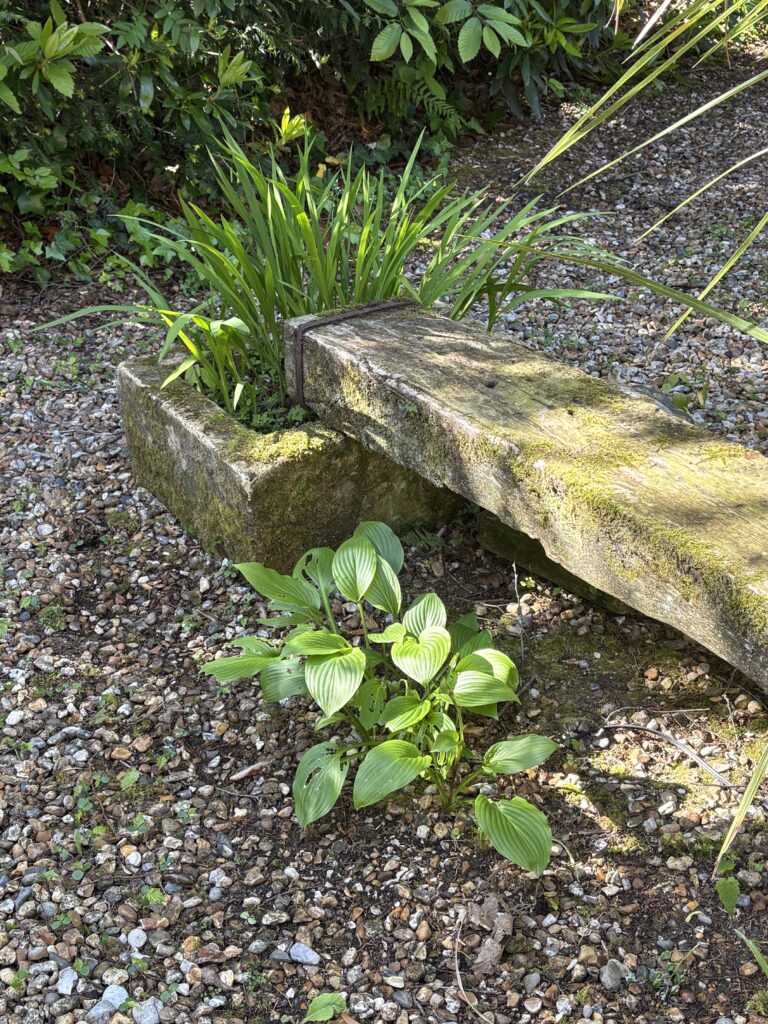
Hosta — large, architectural foliage that complements the structural elements of a zen garden. Shade tolerant and long-lived. Protect from slugs.
If you grow bonsai, a single specimen in a glazed pot makes a natural companion to a zen gravel garden — see our guide to caring for a bonsai tree.
Small Zen Garden Ideas for the UK
You don’t need a large garden to create a zen space. Some of the most successful interpretations are the most compact.
A corner of a patio can become a karesansui with a rectangle of raked gravel, two or three carefully chosen rocks, and a single acer in a glazed pot. A walled courtyard suits the tsubo-niwa style perfectly — one lantern, one water basin, bamboo screening, and a moss-covered ground plane. Even a large tray or shallow container filled with fine white sand and a few small rocks serves as a tabletop zen garden or desktop zen garden — ideal for a balcony or home office.
The principles don’t change with the scale. Restraint, asymmetry, and natural materials work at any size.

Japanese Zen Garden Kit
Bamboo tray, stones, sand and rakes — a complete desktop zen garden. By ZENnTAO, London. ★ 4.9 (1.4k reviews)
Shop on EtsyAdapting Zen Garden Design to the UK Climate
The main practical challenge in the UK is drainage. Traditional raked gravel patterns are disrupted by heavy rain if the ground beneath doesn’t drain freely. A layer of sharp sand or hardcore beneath the gravel membrane helps significantly.
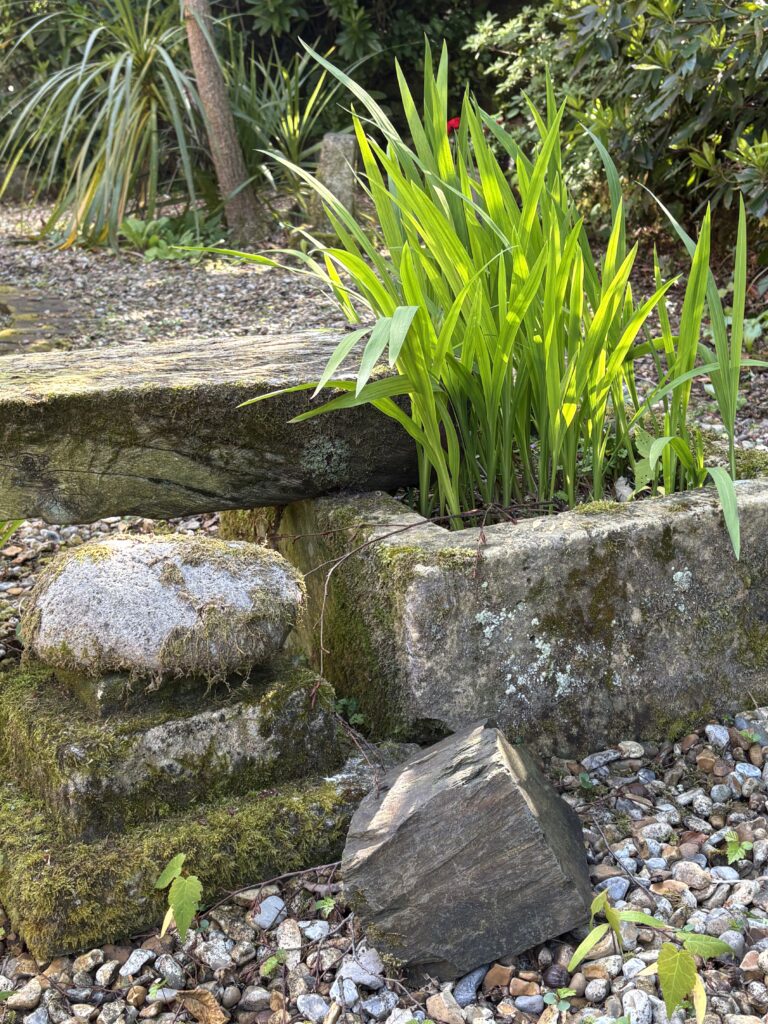
The UK’s natural moss, lichen, and weathering are genuine advantages — embrace them rather than fighting them. A stone lantern that develops a green patina over winter is more beautiful, not less. Rain enhances the texture of rocks and gravel in a way that dry climates simply cannot replicate.
Wind is the main threat to Japanese maples and bamboo — a sheltered position, or screening plants or a bamboo fence, is worth prioritising before planting.
FAQs
What is the purpose of a Japanese zen garden?
Zen gardens were designed as an aid to meditation — spaces where the mind could settle by focusing on simple, natural elements. In a domestic context, that purpose remains valid. A well-designed zen garden offers a place to sit quietly, away from distraction, in a space that has been deliberately composed to encourage calm.
What stones are used in Japanese zen gardens?
In traditional gardens, rocks are chosen for their character — texture, colour, and shape — rather than their species. In the UK, granite, slate, and sandstone all work well. Large rocks should be placed in odd numbers and partially buried for visual stability. For gravel, grey granite chips, white quartz, or cream limestone are the most sympathetic choices.
How do you maintain a zen garden?
Raking the gravel to restore patterns after rain is the main maintenance task — and in zen tradition, a meditative one. Remove weeds before they establish. Prune bamboo and acer lightly to maintain shape. Allow moss, lichen, and weathering to develop naturally rather than cleaning them away.
Can you have plants in a zen garden?
Yes — sparse, carefully chosen planting is entirely appropriate. The key is restraint. A single specimen acer, a clump of bamboo, a ground plane of moss. Avoid flowering plants in large numbers — they introduce colour and abundance that works against the zen aesthetic.
How much does it cost to create a zen garden in the UK?
A simple DIY zen garden — gravel, two or three rocks, a lantern, and a bamboo screen — can be created for a few hundred pounds. A fully landscaped zen garden with water features, mature specimens, and professional installation can cost several thousand. The principles of the style — simplicity, restraint, natural materials — actually favour modest budgets over extravagant ones.
What are some low maintenance zen garden ideas?
The zen garden is naturally low maintenance by design — there are no flowering plants to deadhead, no lawn to mow, and no beds to dig over. The main tasks are raking gravel after heavy rain and occasionally weeding. Moss, lichen, and weathering are welcome rather than problems to solve, which makes a low maintenance japanese garden design one of the most achievable styles for a busy UK household.